Growing Tomatoes in Containers: 5 Simple Rules for Pots
Growing tomatoes in containers works when the pot is measured in gallons: minimum pot volume, watering a small root zone, and varieties that fit a pot.
Key takeaways
- A standard tomato needs a 5-gallon pot at minimum and a cherry tomato 2 gallons; a bush, dwarf or compact variety can go smaller, and one plant per pot is the rule.
- Container tomatoes dry out from below as well as from above: a 5-gallon pot is a small reservoir, so water to runoff and check the weight of the pot rather than the look of the leaves.
- Use potting mix with drainage holes, never garden soil, and skip the gravel layer at the bottom — it raises the water table instead of improving drainage.
- Bush and dwarf varieties suit pots; cordon types work too but need a tall cane and their side shoots removed.
- Set plants out at your average last frost, not before, and expect the first ripe fruit about 70 days after they go into the pot.
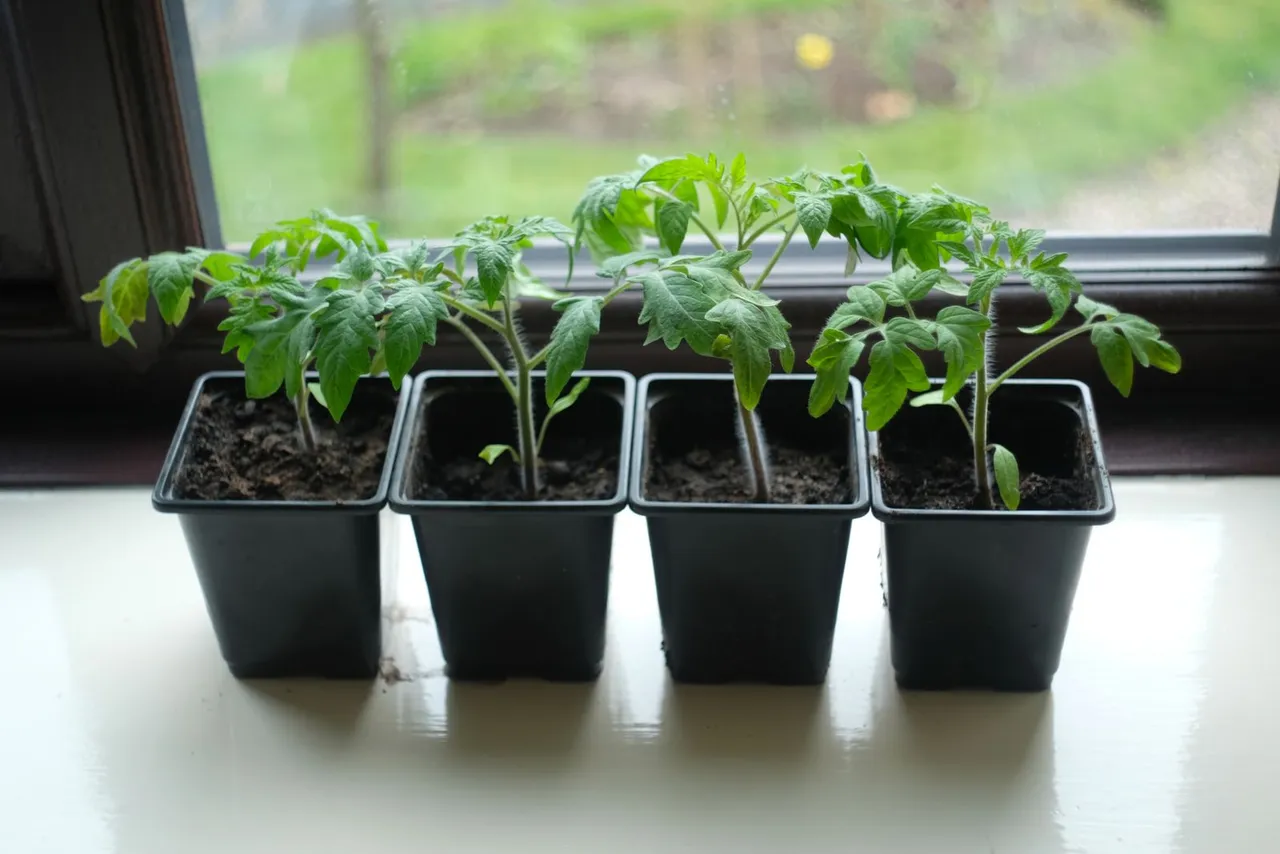
Growing tomatoes in containers is a volume problem before it is a plant problem. A tomato in a bed can send roots down and out for a couple of feet in every direction. A tomato in a 5-gallon pot gets 0.67 cubic feet of mix and nothing else, and every drop of water it drinks has to be carried there by you.
I have grown tomatoes on a rented balcony since 2021, in pots I could lift on my own, and the seasons that failed were never the ones where I forgot to feed. They were the ones where the pot was too small and I spent July watering twice a day to keep up with a decision I had made in April.
So the rules below are about the pot first, the water second, and the plant third. Growing tomatoes in containers gets easier once those three are right, and the rest of the job is maintenance.
Growing tomatoes in containers: the short answer
Five decisions do most of the work: how many gallons the pot holds, what goes in it, how you water, which variety you choose, and how you support and feed it once it is loaded with fruit.
The mechanism behind all five is the same. A pot is a closed root zone, so the plant has no way to reach water or nutrients you did not put in it. Yield tracks the volume of that zone, and every problem that looks like a disease in a pot is usually a shortage or a surplus of water that the volume could not buffer.
That is why the pot volume comes before the variety, and why the variety has to match the pot you already own rather than the other way around.
What size pot does a tomato need?
Growing tomatoes in containers starts with the pot: a standard tomato needs a pot of at least 5 gallons, a cherry tomato at least 2 gallons, and a bush, dwarf or compact variety can go smaller than the full-size types it replaces. Those figures come from the minimum container volume table published by University of Maryland Extension, which lists standard tomatoes at 5 gallons, cherry tomatoes at 2 gallons, and notes that varieties sold as bush, dwarf or compact can be grown in smaller containers.
That 5-gallon floor is the same as a food-grade bucket, which is not a coincidence: the bucket became the standard container tomato pot because it is the smallest thing that is cheap, deep enough, and holds a usable reserve of water. Treat it as one plant per bucket. The gallon figure is per plant, so two plants halve everything each one gets.
Bigger is better when growing tomatoes in containers, and Maryland Extension says so with a photograph rather than an adjective: indeterminate tomato plants in 25-gallon pots grow larger and produce more fruit as container size increases. If you have the space and the nerve to move a pot that size, a 15- to 25-gallon container pays you back in July, when a 5-gallon pot is asking for water every day and a large one is asking every second day.
Depth matters as well as volume. Montana State University Extension’s seed and transplant guide puts standard varieties in containers 24 inches deep, which is deeper than a 5-gallon bucket allows. A wide, shallow planter of the same volume dries faster at the surface and tips more easily in wind.
Shape is the last part of the volume decision. Maryland Extension points out that a 5-gallon container wider than it is tall is less top-heavy and more stable in a breeze than the same volume taller than wide, which matters on a balcony where a laden tomato plant becomes a sail in August.
My own expensive lesson was a 3-gallon nursery pot. The plant grew three feet, set one truss, and then spent the rest of the summer with its leaves curled at midday because the mix was dry by two in the afternoon. The next year the same variety went into a 7-gallon pot on the same balcony and cropped until the first cold night.
Container tomatoes need potting mix, not garden soil
Growing tomatoes in containers means filling the pot with potting mix, not soil dug from the garden. Garden soil in a container compacts, drains badly and can carry weed seed and root pests; a mix built for containers holds air and water in the proportions a confined root system can use. The potting mix and compost guide covers what the bags actually contain and which ones are worth the money.
Drainage comes before anything else you put in the pot. Maryland Extension is blunt about two common habits: every container needs holes or slits to drain excess water, and adding rocks, gravel or broken pot shards to the bottom does not improve drainage — it can raise the water table and waterlog the mix above it. Cover a wide drain hole with a porous material so the mix does not wash out, and stand the pot on feet or bricks so it does not sit in its own runoff.
One advantage of the pot is worth knowing before you plant: container media warms up faster than garden soil, which Maryland Extension notes affects when you can plant and how exposed the roots are to late-spring frosts. Warm roots in May are a head start; a pot on a cold concrete slab in April is not.
Watering container tomatoes: the small root zone problem
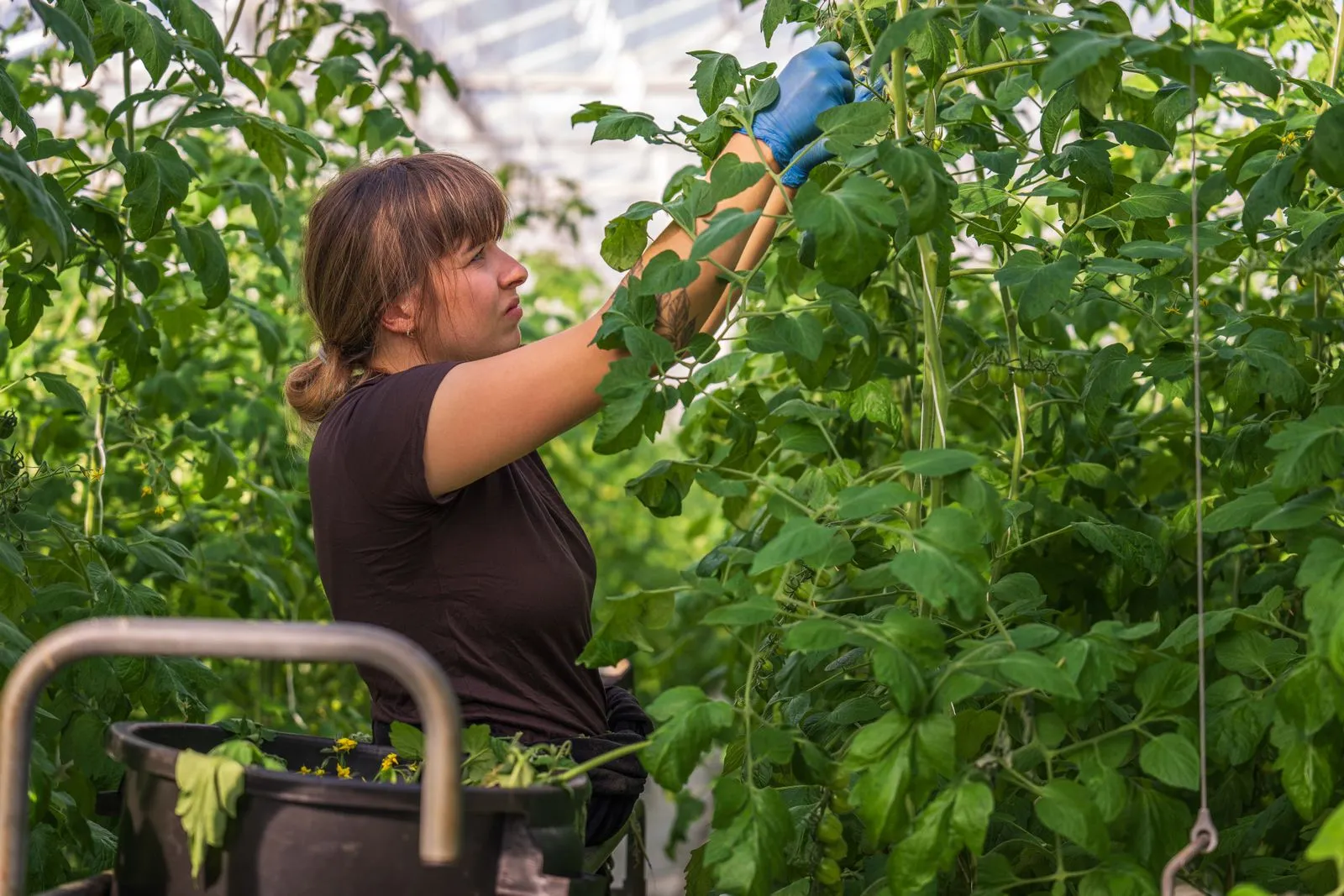
Water container tomatoes when the top inch of mix is dry, which in hot weather can mean daily. Maryland Extension states that some containers will need daily watering when the weather is hot and dry, and it gives the better instrument than a schedule: check the containers regularly, and do not read wilting as a signal, because plants wilt both when they are too dry and when their roots have been kept too wet.
The reason growing tomatoes in containers is a watering job first is arithmetic. A 5-gallon pot holds 0.67 cubic feet of mix, and a fruiting tomato keeps pulling water through it all afternoon in full sun. The reserve empties faster than the plant can tell you, and by the time the leaves flag the roots have already spent an afternoon dry.
Two failures follow from that, and they are opposites. Under-watering shows as curling leaves at midday that recover by evening, then blossom drop, then split fruit when you finally soak the pot. Over-watering shows as pale, limp growth and a mix that smells sour, because saturated pore spaces have no air left in them for the roots.
The fix for both is the same habit: water to runoff, then stop. Pour until water leaves the drainage holes, let the pot drain, and empty the saucer. Maryland Extension warns that saucers catch water which can seep back into the pot if it is not emptied, and that the standing water is also where mosquitoes breed.
Dry mix needs a second pass. When a container has gone too long, the mix shrinks away from the sides and the next watering runs down the gap and straight out of the holes. Maryland Extension’s remedy is to re-wet slowly or to stand the pot halfway in a tub of water until the surface is moist again, which is the same slow-soak trick that rescues a dried-out houseplant.
You can also make the reserve last longer. Group container tomatoes together so they shade each other and slow evaporation, mulch the surface with fine pine bark, straw or shredded leaves, and consider a self-watering container, which stores water in a reservoir below the mix instead of in it.
The check I actually use is weight. Lift the pot after watering and again two days later; the difference is the water the plant has used, and after a few weeks you can feel the answer in your wrist before the leaves mention it. On a 7-gallon pot with a fruiting plant I could tell a dry pot from a watered one by hand all through last July.
Which tomato varieties suit pots
Bush, dwarf and compact varieties suit pots best, and the RHS draws the line between the two growth habits clearly: bush (determinate) tomatoes are naturally more compact, need little maintenance, and are ideal for large patio containers, troughs, window boxes and even hanging baskets, while cordon (indeterminate) types grow well in large containers with a tall cane and need tying in and their side shoots removed.
Montana State University Extension goes further and names varieties: Patio VF, Pixie, Small Fry, Sweet 100, Toy Boy, Tumblin Tom and Yellow Pear are on its list of container varieties, and it names Patio, Small Fry and Tiny Tim as its greenhouse choices. Those are old, widely sold seed lines, which is what you want in a first year: cheap, available, and known to stay within a couple of feet.
The RHS makes the same point about fruit size that container growers discover by trial. Small-fruited varieties tend to be the easiest to grow, fastest to fruit and most prolific, and among its recommended varieties it lists Gold Nugget as a compact bush type, which is the growth habit that fits a pot rather than fights it.
Container tomatoes do not have to be bush types: cordon varieties are not off-limits in a pot, and they are the ones that reward a bigger one. Sungold produces a long season of small fruit in a large container, but it wants a cane at planting time and a weekly pass to pinch out the side shoots that grow in the angle between leaf and stem — the pruning the tomato plant care guide covers in detail for plants in beds and pots alike.
One plant per pot is the rule that makes growing tomatoes in containers work, whatever you choose. Two cordon plants sharing a 10-gallon pot still compete for the same water reserve, and the weaker one loses slowly, which reads as disease rather than competition.
Support and pruning in a pot
With growing tomatoes in containers, put the support in when you plant, not when the plant falls over. Maryland Extension advises installing stakes and supports while plants are young, because anchoring a stake into a pot later means driving it through the root ball, and it lists the tomato cage, round or square or collapsible, as the commonest structure for exactly this job.
In a pot the cage does two jobs at once. It holds the plant up, and it gives you something to tie to when a truss of fruit doubles the weight of a branch. A 5-gallon pot with a determinate plant and a 3-foot cage is a stable, self-contained system; a 5-gallon pot with an unsupported cordon is a plant that will end the season lying across the balcony.
Pruning is where the growth habit decides the routine. Bush varieties need almost nothing: remove yellowing lower leaves, and let the plant do what it was bred to do. Cordon varieties want their side shoots pinched out so the plant puts its energy into the truss rather than into more stem, which is the same rule as in a bed, only with less margin for error because the pot limits how much stem there is room for.
Sanitation matters more in a pot than in a bed. Container tomatoes have no way to outrun a problem the way a garden plant can, so cut the leaf off and drop it in a bucket rather than on the surface of the mix, and clean the blade between plants if you have had disease in the pot before.
Feeding container tomatoes
Feed container tomatoes every two weeks once they are setting fruit, with a slow-release granule working in the background. That is the one part of growing tomatoes in containers that is pure routine. Maryland Extension’s guidance is that plants in containers need regular fertilizing to replace what drains out with frequent watering, that a roughly 3-1-2 ratio of nitrogen, phosphorus and potassium reflects what the plant uses, and that slow-release granules last 2 to 3 months while liquid feeds need to be applied more often.
Its advice for long-season crops is specific: tomatoes, cucumbers, eggplant and peppers may need light fertilizing every two weeks to keep a harvest coming, and if the mix already contains 50 percent compost you halve the fertilizer and wait until the plants are growing before you start.
From the other side of the Atlantic, the RHS tomato guide makes the same recommendation in a different unit: to boost fruiting in containers, feed every 10 to 14 days with an organic high-potassium liquid fertilizer once the first fruits start to swell. Potash at fruit set, nitrogen earlier, is the pattern both sources describe.
Two feeding mistakes are easy to make when growing tomatoes in containers. Feeding a dry plant burns roots, so water first and feed second. And over-feeding is not a shortcut: Maryland Extension warns that too much fertilizer builds up salts in a container and can stress or kill the roots, which is why the runoff habit matters as much for the pot as for the plant.
The 2027 calendar: when to sow and when to set out
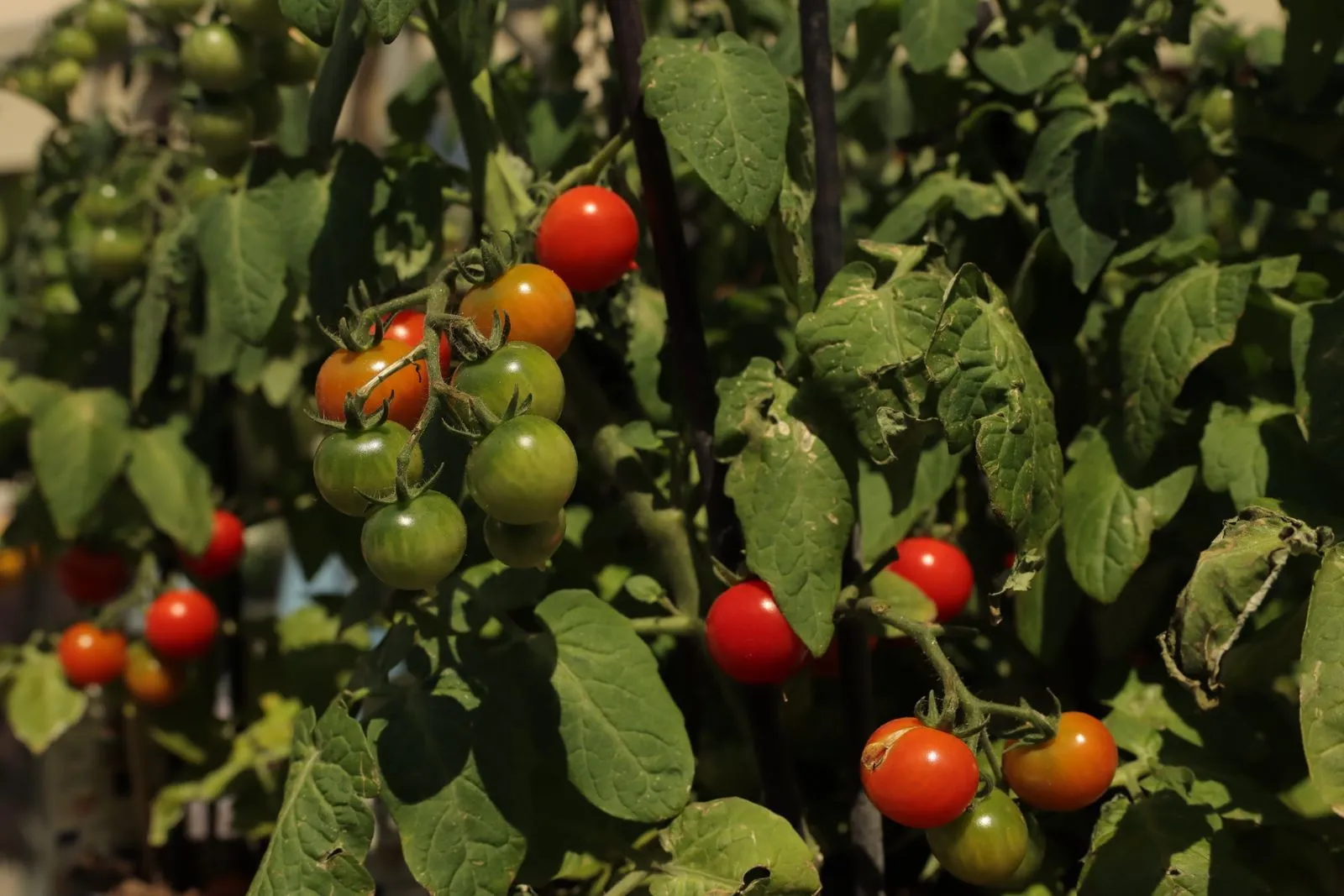
For growing tomatoes in containers in 2027, sow seed indoors 6 to 8 weeks before your average last frost, and set plants out in their pots at that frost date. University of New Hampshire Extension gives both halves of that arithmetic: in Zone 5 in New Hampshire the last frost is typically in late May, tomato seed goes in 6 to 8 weeks before it, and if you plan to plant out on May 27 you start seed between April 1 and April 15.
That worked example is the check on the arithmetic. May 27 minus 8 weeks is April 1, and minus 6 weeks is April 15, which is exactly the range the source prints. Oregon State University Extension’s Eastern Oregon schedule uses the same method from the other direction and puts tomatoes at 0 weeks from its frost-free date — set out at the date itself — with the seed sown 8 weeks earlier. Montana State University Extension is more generous, listing 6 to 10 weeks to transplant size and a planting window that opens a week before the last frost.
For 2027, here is the arithmetic done per station, with the station’s own published last-freeze date and the two ends of the 6-to-8-week sowing window counted back from it.
| Station, average last spring freeze | Sow seed indoors, 6-8 weeks before | Set out in the pot |
|---|---|---|
| Hatteras WSO (KHSE), Dare County, NC, 17 ft — March 5 | January 8 - January 22 | March 5 |
| Raleigh Ap (COOP 317069), Wake County, NC, 435 ft — April 8 | February 11 - February 25 | April 8 |
| Boone 1 Se (COOP 310982), Watauga County, NC, 3,360 ft — May 1 | March 6 - March 20 | May 1 |
| Mt Mitchell (COOP 315923), Yancey County, NC, 6,240 ft — May 17 | March 22 - April 5 | May 17 |
| Eastern Oregon, region average — May 21 | March 26 - April 9 | May 21 |
The North Carolina dates come from NC State’s table of average first and last freeze dates, which lists each station with its elevation and the years of record behind the figure; the Oregon date is the frost-free date Oregon State’s schedule is built on, and its table lists tomatoes at 0 weeks from that date and 8 weeks indoors.
Read that table as a spread, not a schedule, because growing tomatoes in containers is a local date before it is a national one. Those two North Carolina stations are in the same state and five weeks apart, because Hatteras is at sea level on the coast and Boone is 3,360 feet up in the mountains, and Mt Mitchell at 6,240 feet is later again. One garden in a hollow can run two weeks behind another a mile away on a ridge.
The frost date itself is a probability, not a fixed day. Maryland Extension’s worked example for Frederick puts a 90 percent chance of a 32°F night on or after March 29 and only a 10 percent chance of one on or after April 19 — a three-week swing inside one town. For a tender transplant, the later date is the one to plan around, and a pot has an advantage a bed does not: you can carry it in for a cold night and put it back out in the morning.
Hardiness bands do not replace any of this. The USDA Plant Hardiness Zone Map defines zones by the average annual extreme minimum winter temperature, which is a measure of how cold January gets, not of when spring stops freezing. Nebraska Extension’s frost page makes the same point at state scale, with average last frost running from late April in the southeast of the state to mid May in the northwest. That is why the table above names stations and dates rather than bands: a band is a winter minimum, and no source states a tomato sowing date for a band.
If your band is not in the table, the arithmetic still is. Your county extension office publishes the figure for the nearest airport or research station, and every cell above is that figure minus 6 or 8 weeks. Write your own row at the bottom and use it.
What goes wrong in a pot
Most pot failures are water failures wearing a symptom, and growing tomatoes in containers makes that harder to see because the pot hides the roots. Split fruit follows a dry spell that ends in a flood, because the skin stops expanding and the fruit inside does not, so keep the watering even through a heat wave rather than compensating after one.
Blossom drop in container tomatoes during a heat wave is the same story from the flower’s side: pollen fails in sustained high heat, and a pot that dries out at midday makes it worse. Shade the pot, not the leaves, if you can, and water in the morning so the plant has a reserve before the afternoon.
Leggy transplants are what a January sowing in a dim room produces, and they are the real cost of the early end of a sowing window. A tomato that has to be planted on its side because it stretched for a window has spent the light it needed on stem instead of roots, which is why the later end of the 6-to-8-week range is usually the better answer indoors.
Root rot from a saucer that never gets emptied is the last one, and the least obvious, because the plant looks thirsty while its roots are drowning. If you cannot commit to emptying saucers, use pot feet and no saucer, and let the runoff go onto the balcony floor.
A pot routine that survives a working week
Water in the morning before work, to runoff, and empty the saucers. On the hottest weeks, check the weight of the pots again when you get home and give the small ones a top-up if they feel light.
Once a week, tie in whatever has grown, pinch the side shoots on the cordon varieties, and pull any yellow leaf that comes away with a light tug. Once every two weeks, feed with the high-potassium liquid. Once a month, look at the underside of the leaves for the first aphids, and check that the drainage holes are still clear.
That is the whole routine for growing tomatoes in containers, and it fits into a lunch break. Container tomatoes are not a harder crop than bed tomatoes; they are a crop with a smaller margin, and a margin is easier to defend with a routine than with a rescue.
If this is your first season growing tomatoes in containers, the balcony garden guide covers the space and weight questions, and growing a leaf crop alongside the tomatoes is a gentler start — kale in a pot takes the same mix and a third of the water. Everything else in this cluster lives under Outdoor Spaces, and the full-season version of tomato care, from seed to seed-saving, is in the tomato plant care guide.
Growing tomatoes in containers comes down to buying the largest pot you can move, filling it with mix that drains, and treating water as the daily task it is. Tomato plant care container growers get wrong most often is not feeding or pruning. It is a pot that was too small in April and a hose that was too late in July.
QUESTIONS GARDENERS ASK
Common questions
What size pot does a tomato need?
Maryland Extension puts the minimum at 5 gallons for a standard tomato and 2 gallons for a cherry tomato, with bush, dwarf and compact varieties allowed smaller pots. A 5-gallon bucket is the practical floor for one full-size plant, and yield keeps climbing as the pot gets bigger: the same guide shows indeterminate plants in 25-gallon pots producing more as volume increases.
Can I grow tomatoes in a five-gallon bucket?
Yes, and it is the cheapest honest container for one plant. Drill or check for drainage holes, fill it with potting mix rather than garden soil, and remember that a bucket holds only 0.67 cubic feet of mix, so it will need water most days in hot weather. A bucket is one plant, not two.
How often should I water tomatoes in containers?
Check daily once the plants are setting fruit and water when the top inch of mix is dry. Maryland Extension notes that some containers need daily watering in hot, dry weather, and that wilting is not a reliable signal because a plant wilts both when it is too dry and when its roots have been kept too wet.
How many tomato plants fit in one 5-gallon bucket?
One. The 5-gallon figure is a per-plant minimum for a standard tomato, so two plants in one bucket halve the root space and the water reserve each one gets. For a fuller pot, grow a single plant and let it fill the space with fruit instead.
Which tomato varieties stay small enough for pots?
Bush, dwarf and compact types do. Montana State University Extension lists Patio VF, Pixie, Small Fry, Sweet 100, Toy Boy, Tumblin Tom and Yellow Pear among varieties designed for containers, and the RHS describes bush types as compact and ideal for large patio containers, with trailing types for window boxes and hanging baskets.
Do container tomatoes need full sun?
Yes. Maryland Extension gives warm-season crops such as tomato, pepper and eggplant 6 to 8 hours of direct sun, and Montana State University Extension puts tomatoes at 8 hours or more daily. Shade slows ripening more than it slows growth, so a pot in four hours of sun will grow and then sit green.
Should I put gravel in the bottom of the pot?
No. Maryland Extension is direct that adding rocks, gravel or broken pot shards to the bottom of a container does not improve drainage and can raise the water table, waterlogging the mix above it. Use a pot with real drainage holes, cover a wide hole with a porous material so the mix does not wash out, and stand the pot on feet or bricks.
How much fertilizer does a container tomato need?
More than a garden plant, because every watering flushes nutrients out of the pot. Maryland Extension suggests a roughly 3-1-2 ratio feed, notes that slow-release granules last 2 to 3 months, and advises lightly fertilizing long-season crops such as tomatoes every two weeks for a continuous harvest. The RHS feeds container tomatoes every 10 to 14 days with a high-potassium liquid once the first fruits swell.
Sources
- University of Maryland Extension — Growing Vegetables in Containers and Salad Tables
- University of Maryland Extension — Spring Frost or Freeze Dates in Maryland
- Montana State University Extension — Can I Grow That Here? Seed and transplant schedules (MT199308AG)
- RHS — How to grow tomatoes
- NC State Extension — Average First and Last Freeze Dates
- Oregon State University Extension — Eastern Oregon seed-starting schedule
- Nebraska Extension — Weather Ready: Frost
- University of New Hampshire Extension — How do I know when to start seedlings indoors?
- USDA ARS — 2023 Plant Hardiness Zone Map
 Outdoor Spaces
Tomato Plant Care: 7 Simple Rules for a Healthy Harvest
Tomato plant care in seven rules: how much sun and water a plant needs, when to prune, what causes blossom end rot, and a 2027 planting calendar. Small Spaces
Balcony Garden Ideas: 7 Simple Setups That Survive Wind
Balcony garden ideas that hold up in real wind: seven container setups sized for weight limits, small water volumes and the light a railing really gets. Outdoor Spaces
How to Build a Raised Garden Bed: 6 Simple Steps
How to build a raised garden bed in one weekend: six steps from siting and lumber to a soil mix that drains, plus the 2027 dates to fill it by weather station.Reading us often? Add MyGreenyGarden as a preferred source on Google and our guides are more likely to be highlighted when you search.