Tomato Plant Care: 7 Simple Rules for a Healthy Harvest
Tomato plant care in seven rules: how much sun and water a plant needs, when to prune, what causes blossom end rot, and a 2027 planting calendar.
Key takeaways
- Tomato plant care comes down to seven things: six hours of direct sun or more, 1–2 inches of water a week delivered deep rather than often, soil above 60°F at planting, a pot that holds at least 8 gallons, support from day one, pruning to one to three stems, and light feeding.
- Most fruit problems are set weeks before you see them. Blossom end rot is a calcium shortage inside the fruit caused by uneven watering, not by soil that needs more calcium.
- Prune indeterminate tomatoes only, and start when the shoot is small enough to pinch with your fingers. Bush or determinate types are not pruned this way.
- A last-frost date is a probability. The 2027 calendar below uses the date with a 10% chance of a later freeze, because a transplant set out early spends its best weeks waiting.
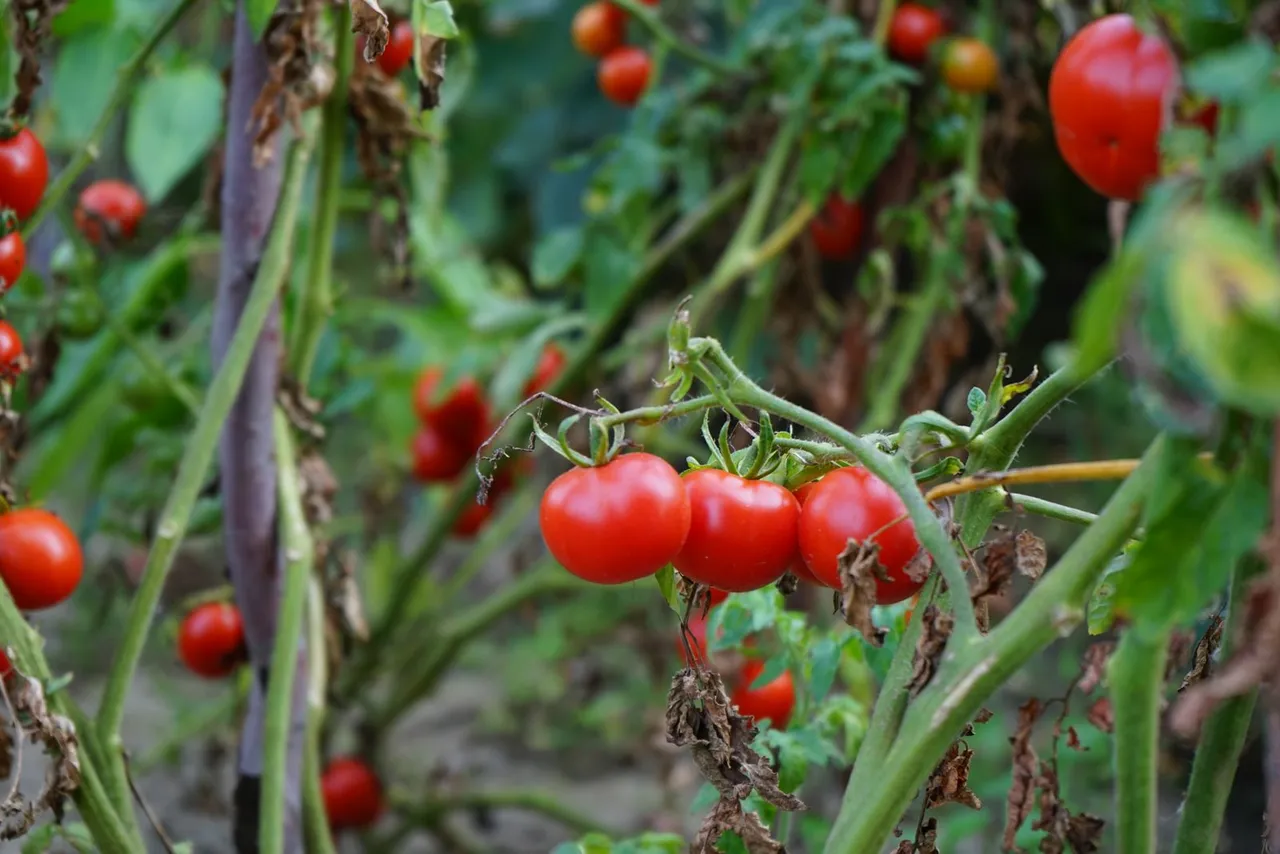
A tomato plant does not fail quietly. It sets its first trusses, then reports back on your watering, your pot and your pruning in yellow leaves, split fruit, or a leathery black patch where the blossom used to be. Tomato plant care is mostly the work of reading those signals early, because nearly every fruit problem is decided weeks before you can see it.
I grow tomatoes in raised beds and in a few large pots on a gravel path, and the routine below is what has survived my own mistakes. This tomato plant care guide follows the order the questions actually arrive in: light, water, soil, pruning, feeding, then the fruit.
Tomato plant care: the seven rules in one minute
If you read nothing else about tomato plant care, read these seven rules. The first four are structural — you set them once at planting — and the last three are adjustments you make through the season.
- Sun. Six hours of direct sun minimum, eight to ten preferred. The University of Maryland Extension puts full sun for tomatoes at “direct light at least 6 hours/day” and notes the plant “prefers 8 - 10 hours/day.”
- Water. One to two inches a week, delivered deep and infrequent rather than as a daily splash. Utah State University Extension gives that figure and adds the reason: irregular watering, over or under, is what causes blossom-end rot.
- Soil. Well drained, and warm at planting. Utah State advises transplanting when soils are warmer than 60°F or after all frost danger has passed.
- Space and pot size. Two feet apart in the row with rows two to three feet apart for beds. In a container, a full-size tomato wants 8 to 10 gallons of growing mix and 12 to 16 inches of depth.
- Support. Stake or cage at planting. A stake driven a foot into the soil four to six inches from the stem, six to eight feet long, is the Maryland Extension standard for a staked plant.
- Pruning. Indeterminate types to one to three main stems, suckers checked weekly. Determinate types are left alone.
- Feeding. Light and timed. A side-dress of half a tablespoon of 21-0-0 at four weeks and again at eight weeks after transplanting is the Utah State rate, and over-feeding is a named cause of delayed fruit set.
Everything below explains the mechanism behind those seven rules of tomato plant care, because a rule you understand survives a season you did not plan for.
Sun: how much light a tomato really needs
Six hours is the floor, not the target, and it is where tomato plant care starts because no other input compensates for a shortage. The Maryland Extension figure is direct light for at least six hours a day with a preference for eight to ten, and their container guidance repeats six to eight hours for warm-season crops. Distance matters as much as hours in tomato plant care. Direct means sun falling on the plant, uninterrupted by a wall, a fence or a tree canopy. A bed that faces south but sits three feet from a solid fence loses the first and last two hours of the day without looking shady.
The mechanism explains three symptoms at once, and it is why tomato plant care starts with light rather than with feed. Light drives sugar production, and sugar drives fruit set and ripening. A plant under six hours of sun stretches between leaves, sets fewer trusses, and dries more slowly after rain. That last one matters most, because leaf-spot fungi need hours of leaf wetness. Two of the diseases that yellow and kill tomato leaves — Septoria leaf spot and early blight — are described by the Maryland Extension diagnostic guide as favored by wet or rainy weather, and both start on the lower leaves where the canopy is densest and the air is still.
Heat is the other half of the light story in tomato plant care, and it cuts both ways. Utah State notes that tomato fruits abort if temperatures exceed 90°F, and that flowers are sensitive to high temperatures during development and early fruit set. Maryland Extension lists the opposite failure too: catfacing, the scarred and misshapen fruit on the first cluster, is associated with cool temperatures below 50°F during fruit set. A plant set out while nights are still in the forties will give you a distorted first truss. The fix is not a treatment, it is a later planting date, which is what the 2027 calendar further down is for.
Water: one to two inches a week, and what that means in a pot
One to two inches per week is the Utah State figure for tomato plant care, and “deeply and infrequently” is the instruction that goes with it. The unit is abstract, so convert it once: an inch of water over a square foot is a little over half a gallon, so a single plant in open ground is taking roughly one to two gallons a week from you plus whatever rain arrives.
Deep watering is the heart of tomato plant care in summer: it wets the whole root zone and then lets air back into the soil. A daily splash wets the top inch, the roots concentrate there, and the plant becomes dependent on you being home at six. Utah State recommends drip irrigation where possible and mulch around the plants to hold the moisture in.
In a pot, the same number applies to a much smaller volume, and this is the part of tomato plant care that goes wrong fastest. Maryland Extension is blunt about it: some containers will need watering every day when the weather is hot and dry. Their other warning is about pot color and material — dark containers create higher temperatures that can injure tender young roots, and porous containers in clay, ceramic, concrete or wood dry out faster than plastic or metal.
Three tomato plant care rules hold in both settings:
- Check two inches down before you water, not the surface. A dry crust over wet soil is normal in a pot that has been watered from the top.
- Water until it runs out of the drainage holes, then empty the saucer. Maryland Extension notes that a saucer left full keeps the bottom of the pot in standing water.
- Never let a plant sit dry for a week and then flood it. That swing is the single biggest cause of the fruit problem covered below.
Soil, spacing, and the pot that is actually big enough
Soil is the part of tomato plant care you can only get right before planting: tomatoes want well-drained soil and do poorly in heavy, wet soils; Utah State suggests a raised bed where drainage is poor. Before planting, a soil test settles how much fertilizer, if any, is warranted, and their instruction is to work it into the top six inches. If you are feeding with compost, cap it at one inch of well-rotted material per 100 square feet.
Spacing is a disease control rather than a layout choice, and it is the cheapest tomato plant care decision you make. Utah State gives two feet between transplants in the row with rows two to three feet apart; Maryland Extension ranges from 18 to 36 inches in the row with 48 to 60 inches between rows, depending on growth habit and whether the plants are staked or caged. Wider spacing dries faster after rain, which is exactly what a leaf-spot-prone crop needs.
Plant deeper than the pot it came in. Both extension guides make the same point in different words — Maryland says to set the transplant so that only two or three sets of true leaves are exposed, and Utah State notes that a tall plant can be buried deeper because tomatoes form roots along the stem. That buried stem becomes more root, which is free drought insurance. A transplant with flowers or fruit on it should have them removed before planting, because Utah State’s observation is that fruiting transplants establish slowly and yield poorly.
For containers, the numbers are specific, and getting them right is the part of tomato plant care most often missed. Maryland Extension’s container guide puts a full-size tomato in the “large vegetables” band: a minimum of 8 to 10 gallons of growing media with a depth of 12 to 16 inches, one plant per container. Dwarf and patio varieties drop to 4 to 6 gallons with 8 to 12 inches of depth. Two of their cautions are worth adopting permanently: all containers need drainage holes except self-watering types, and adding rocks or gravel to the bottom of a pot does not improve drainage — it raises the water table inside the pot instead.
If you are new to growing food in pots, the kale in a pot guide sets out the same volume-versus-crop logic for a leafy plant, and potting mix and compost covers what should actually go in the container.
How to prune tomatoes without cutting the crop
Learn how to prune tomatoes and you have solved the second half of tomato plant care, because the plant’s shape decides how much of its sugar reaches fruit. The rule is conditional: prune indeterminate tomatoes, leave determinate ones alone, and start while the shoot is still small.
The distinction is the whole decision. The RHS separates cordon (indeterminate) tomatoes, which are vigorous, get very tall, need tall supports and crop well only with the removal of side shoots, from bush (determinate) types, which are naturally compact and need little maintenance. Maryland Extension describes the same two habits from the growing side: indeterminate vines keep growing until frost or disease kills them, while determinate plants stop at a certain height and set their crop in a concentrated window.
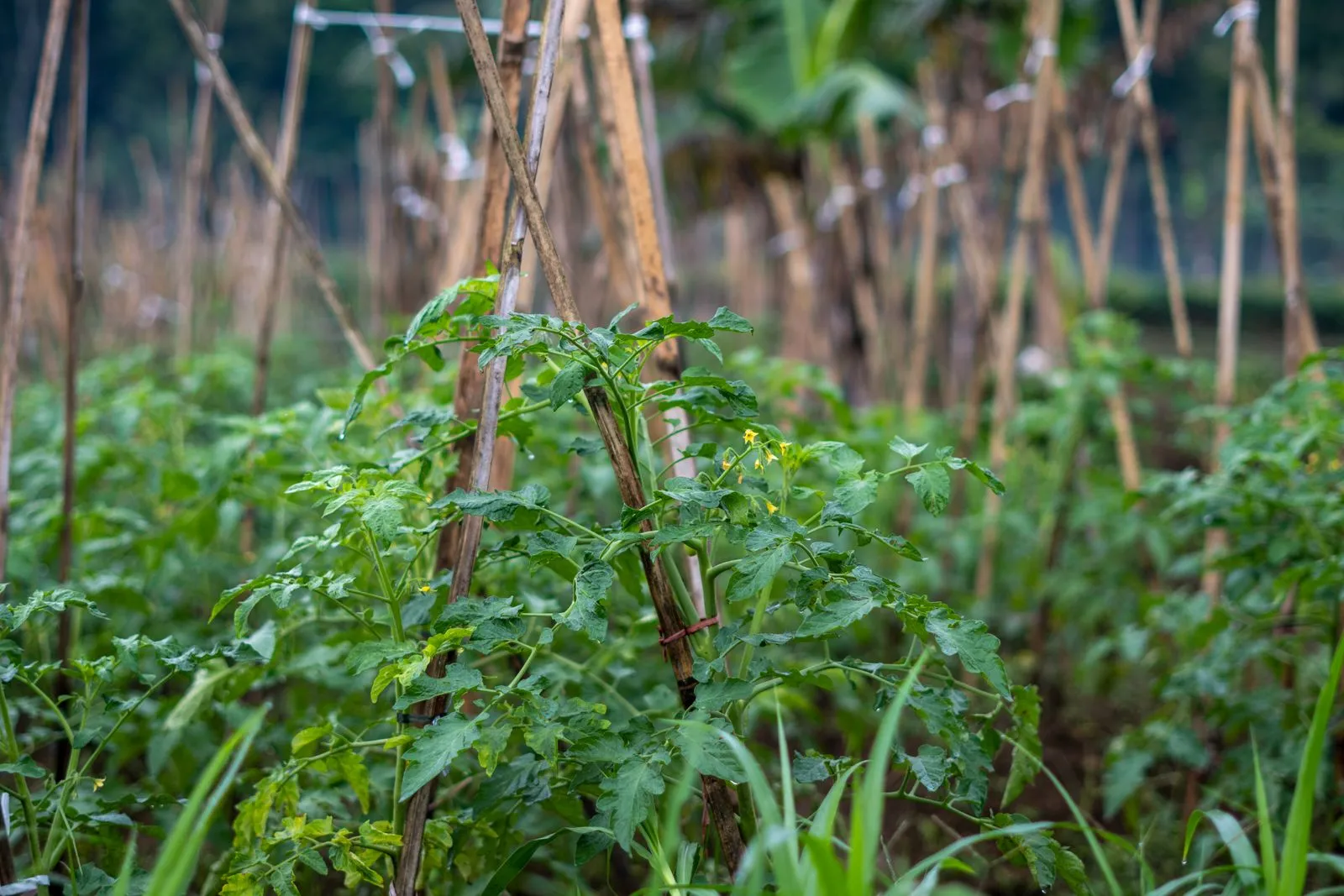
On an indeterminate plant, every sucker you leave becomes a second stem with its own leaves and trusses, and the plant grows into a mound that shades its own fruit and dries slowly. Maryland Extension’s guidance is to prune staked tomatoes to one to three main stems and remove all other suckers weekly, pinching the shoots off with your fingers, with particular attention to suckers emerging from the base of the plant. They credit moderate pruning with increasing fruit size, hastening ripening and keeping plants manageable.
On a determinate plant, pruning those same shoots removes the branches that carry most of the fruit. Leave it. Support it if the stems bend under the load, which the RHS notes is the extent of what a bush type needs.
The practical sequence for a cordon or indeterminate plant:
- Let the first truss set before you start. A plant that has begun to flower is working, and the shoot you remove is a decision about where that work goes.
- Find the join between a leaf stem and the main stem, and pinch the shoot growing out of that V while it is still soft. Maryland Extension’s instruction is fingers, not pruning shears, for exactly this reason.
- Work up the plant, one pass a week. A missed week means a shoot with its own flower buds, and removing it then costs you fruit.
- Keep the base clear. Suckers from the bottom of the plant produce foliage where the air is stillest and the soil splash is worst.
- Stop taking material off late in the season. Once the plant is ripening its last trusses, the leaves it has are the factory.
The honest caveat: pruning is not free yield, and tomato plant care is always a trade like this one. Maryland Extension frames it as a trade — bigger fruit, faster ripening, a manageable plant — and the cost is fewer trusses overall. On a short-season site that trade is clearly worth it. In a long, hot season with plenty of space, two stems rather than one is the usual compromise.
Feeding: the four-week and eight-week side-dress
Feed on a schedule, lightly, and stop guessing — this is the smallest part of tomato plant care and the one most often overdone. Utah State’s rate is half a tablespoon of 21-0-0 sprinkled around each plant at four weeks and again at eight weeks after transplanting, watered in. Maryland Extension describes tomatoes as having a high nutrient requirement and advises side-dressing after the first fruits appear, with a starter fertilizer at planting.
The failure mode is over-feeding, and it is specific. Utah State warns that over-fertilizing causes excess leaf growth and delays fruit set and maturity. In practice that looks like a huge, dark, healthy plant with very little fruit — the nitrogen has pushed vegetative growth at the expense of flowering, and the dense canopy makes the leaf-spot problem worse at the same time. If your plant is a hedge with three tomatoes on it, the answer is not more feed.
The rest of tomato plant care is restraint, and Maryland Extension adds a useful negative: do not add Epsom salts to the soil unless a soil test shows a magnesium deficiency. It is one of the most commonly recommended garden additives and one of the least often needed. The same principle covers the calcium sprays sold for blossom end rot, which the next section deals with.
What causes blossom end rot, and what does not
Blossom end rot is the tomato plant care problem most often misdiagnosed: a calcium shortage inside the fruit, and the shortage is nearly always a watering problem rather than a soil problem. Utah State describes it as a localized calcium deficiency brought on by poor water management, excessive nitrogen, root pruning and drought stress, with affected fruits going dry and brown or black at the flower end. The key word is localized: calcium moves in the plant’s water stream and cannot be relocated once it is in a leaf, so a fruit enlarging during a dry spell simply does not get enough, even in soil full of calcium.
That is why the treatment is water, not supplements. Utah State’s control is good water and nutrient management, uniform soil moisture during hot weather, particularly when plants are flowering, and mulch around the plants. Maryland Extension suggests mixing a quarter cup of gypsum into the planting hole only where a soil test shows the calcium level is low — a soil correction, not a rescue spray.
Two consequences follow. First, the fruit already affected will not recover; it is a scar on that tomato, and the plant’s next trusses are the test. Second, a foliar calcium spray aimed at the leaves does not reach the fruit reliably, which is why the extension guidance points at moisture instead. The good news is that the disorder is described by Maryland Extension as very common and most prevalent on enlarging fruit — meaning it hits the first heavy truss of the season and often stops once your watering evens out.
When tomato leaves turn yellow
Yellow leaves on a tomato are a short list, and the list is worth learning because two of the entries are diseases you cannot water your way out of. It is the question that brings most people to a tomato plant care guide in the first place. Maryland Extension’s diagnostic guide separates the causes by symptom:
- Cold injury. Light tan or gray blotches after nights below 35°F, seen early in the season. The plant usually outgrows it.
- Septoria leaf spot. Small round gray spots with dark margins on the lower leaves, usually as the first fruits form. Lesions enlarge and the leaf yellows and dies.
- Early blight. Irregular brown lesions with yellow halos and a target pattern inside them, lower leaves first, favored by rainy weather.
- Fusarium wilt. Lower leaves yellow and then brown, wilting that recovers at night, with one-sided yellowing on a leaf. Scrape the stem and the tissue underneath is discolored.
- Low phosphorus. Purple on leaf undersides and stems, most common in young seedlings and transplants, and it resolves as roots establish.
There is also a harmless one. Maryland Extension describes leaf roll — upward curling in mid-summer heat — as a moisture-stress response that does not harm growth or yield, and notes that heavily pruned determinate varieties are more prone to it.
Read the leaf before you change any other part of your tomato plant care routine. The general diagnostic order matches the houseplant version of the same question, which the guide to yellow leaves on plants sets out in detail: old leaves or new, blotches or an even fade, and whether the whole plant is wilting. On a tomato, add a rule the houseplant case does not have — check the calendar. Yellowing that appears within two weeks of planting out is cold, not disease.
Why won’t my tomatoes ripen
Ripening is the last test of tomato plant care, and it is a supply problem: not enough light, not enough time, or too much nitrogen. Maryland Extension lists low sunlight, plant crowding, excessive nitrogen, insufficient ripening time and high temperatures as the causes of slow ripening, and adds that uneven ripening on large-fruited and plum types late in the season is often varietal.
The number that reframes the season is this one from Utah State: tomato fruits need 25 to 35 days to mature from flowering, depending on temperature and variety. Count back from your first expected frost. A truss that flowers five weeks before that date is the last one with a realistic chance, which is why late-season pruning matters and why a plant that spent July making leaves has nothing left to finish.
The end of tomato plant care is the harvest, and you should pick earlier than feels right. Maryland Extension’s instruction is to pick as soon as fruit color begins to change, which prevents cracking, splitting, insect feeding and disease, and increases the share of edible fruit. Those fruit finish ripening on the counter, and their point is a good one: you will not be able to tell the difference, and light is not needed for ripening. Keep them out of the refrigerator.
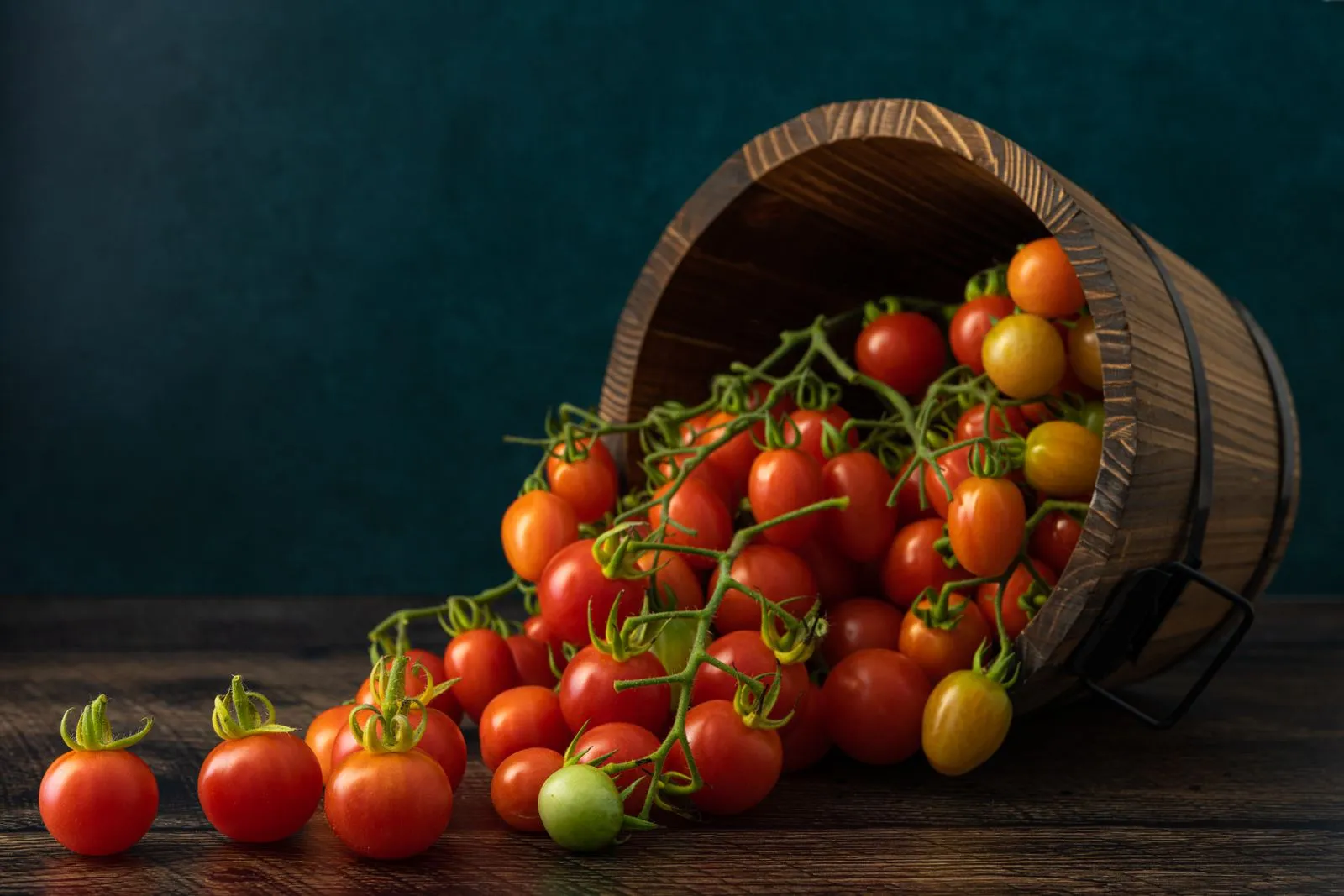
At the end of the season, Utah State’s routine is to gather all the mature green and slightly colored fruit and store it at 55°F to ripen over time; Maryland suggests 50°F to 70°F at high humidity for one to three weeks. Either way, the green tomatoes on the vine in October are a harvest, not a failure.
The 2027 tomato planting calendar, by weather station
Planting dates are the part of tomato plant care that no general guide can give you, because the answer is a probability at your nearest weather station, not a date on a zone map. A USDA hardiness zone is the average annual extreme minimum winter temperature, displayed in 10°F bands and 5°F half zones — it tells you what survives January and says nothing about when spring stops freezing.
The table below fixes both ends of the job for six stations. The middle column is the last spring freeze at 32°F with only a 10% chance of a later one, read from NOAA’s National Centers for Environmental Information freeze and frost data for that station’s state file; that is also the earliest date to set out a transplant. The right column is seven weeks earlier, the middle of the 6 to 8 weeks Utah State allows to grow a transplant. Zones were looked up for each station’s own coordinates on the USDA map.
| Station (USDA zone) | Last 32°F freeze | Start seed indoors |
|---|---|---|
| Minneapolis Intl AP, MN (5a) | May 12 | Mar 24 |
| Denver Stapleton, CO (6a) | May 13 | Mar 25 |
| Chicago O’Hare Intl AP, IL (5b) | May 10 | Mar 22 |
| Kansas City Downtown AP, MO (6b) | Apr 21 | Mar 3 |
| Raleigh-Durham AP, NC (8a) | Apr 25 | Mar 7 |
| Austin City (Camp Mabry), TX (9a) | Mar 15 | Jan 25 |
Read the middle column carefully, because the probability language is doing real work. NCEI’s own note defines the figure as the probability of a later date in spring than the one shown, so the 10% column means a one-in-ten chance of a freeze after that date — not a guarantee. The 50% column at the same stations runs from twelve days earlier in Minneapolis to nearly four weeks earlier in Austin, and planting to the 50% date means a coin flip on a frost that will strip a young plant.
Three further cautions belong with the table. A late freeze is not the only risk: Maryland Extension notes that cold injury to tomato leaves appears after nights below 35°F, which is above the freeze threshold, so a plant set out a week early can still be marked. Soil temperature matters independently, which is why Utah State ties transplanting to soil warmer than 60°F, and a cold, wet spring delays that behind the frost date. And if your nearest listed station is not your garden, the arithmetic still works — your county extension publishes a station figure, and both columns are calculated the same way.
The dates in that table are the fixed end of tomato plant care; everything else in this guide is adjustable. Early plants are not better plants. A transplant that goes out two weeks before the weather is ready sits in cold soil not growing, drops its first flowers, and yields less than a plant set out on time. The RHS describes tomatoes as tender plants that need protection from frost, and that is the whole case for waiting.
If you are starting from seed rather than buying transplants, the arithmetic for the sowing date is the same one the site uses in when to start seeds indoors, and the bed itself should be cleared before any of this begins — the spring cleanup checklist is the sequence for that week.
The mistakes that cost me a crop
My worst season was the one where I did everything at once in the same week: a new bed, a bag of high-nitrogen feed, plants set out early under a cloche I forgot to vent, and a heat wave in the first two weeks. The plants grew into a wall of foliage and set almost nothing. Three separate mistakes were invisible until August, which is the reason the sections above are ordered the way they are.
The second mistake was a pot, and both were tomato plant care decisions made in a single afternoon. I grew a cherry tomato in a five-gallon container on a south-facing wall and watered it every morning. It set a good first truss, then dried out by early afternoon in July and cracked every fruit that followed. The plant needed roughly twice the mix and one deep watering rather than a shallow daily one — the 8 to 10 gallon band in Maryland Extension’s container guide is the number I should have started from.
What changed my results was measuring instead of guessing. Lifting the pot told me more than looking at the soil surface ever did, and a cheap soil thermometer settled the planting date question in a way that the calendar alone could not, because my bed warms later than the airport does. Tomato plant care is not a long list of jobs; it is a short list of measurements taken at the right time.
The short version
Tomato plant care is seven rules and one habit. Six to ten hours of direct sun, an inch or two of water a week delivered deep, soil above 60°F, a pot of 8 to 10 gallons or two feet of bed per plant, support from day one, prune the indeterminate types to one to three stems, and feed lightly at four and eight weeks.
The habit is checking rather than scheduling, and none of this tomato plant care needs special equipment. Test the soil two inches down before watering, lift the pot to judge its weight, count the days from flowering to your first frost date, and read the leaves before you reach for a bottle. Blossom end rot, yellow leaves and unripe fruit are all reports on conditions that started weeks earlier.
For the container version of this guide, kale in a pot covers volume and watering in small spaces, and the Outdoor Spaces archive holds the rest of the bed and patio work. If you are still working out what the plants are telling you, the plant care guides start with the same diagnostic order.
QUESTIONS GARDENERS ASK
Common questions
How often should I water tomato plants?
Water deeply once a week in normal weather and twice a week in a hot dry spell, aiming for 1–2 inches of water a week including rain. Check two inches down instead of watering on a fixed day: if the soil is dry at that depth, water until it drains from the bottom of the pot or soaks the root zone.
How much sun do tomato plants need?
At least six hours of direct sun a day, and eight to ten is better. Direct means uninterrupted sun on the plant, not a bright room seen from indoors. Under six hours a plant stretches, sets fewer trusses and dries more slowly, which is what lets leaf diseases take hold.
What causes blossom end rot?
A local calcium shortage in the enlarging fruit, brought on by uneven watering, drought stress, damaged roots or too much nitrogen. The soil usually holds enough calcium; the plant simply cannot move it into the fruit fast enough when moisture swings. Steady watering and mulch fix most cases.
When should I prune tomato plants?
Start once the first flower truss is set and a sucker at the leaf joint is big enough to pinch out between thumb and finger, then check weekly through the season. Prune indeterminate and cordon types; leave bush and determinate tomatoes alone, because their crop comes on all at once at the top of the plant.
Why are tomato plant leaves turning yellow?
Usually one of four things: cold nights below 35°F, a fungal leaf spot that starts on the lower leaves, a wilt that yellows one side of a leaf, or simple ageing at the base of a long vine. Yellow between the veins on new growth is a nutrient problem; yellow blotches with grey centres are disease.
What size pot does a tomato need?
At least 8 to 10 gallons of growing mix with 12 to 16 inches of depth for a full-size plant, and 4 to 6 gallons with 8 to 12 inches of depth for a dwarf or patio variety. Anything smaller dries out twice a day in July and caps the crop no matter how well you feed it.
Why won't my tomatoes ripen?
Low sunlight, crowded foliage, too much nitrogen, and high temperatures all slow ripening. A plant in shade or in a jungle of unpruned shoots will keep setting green fruit it cannot finish. Pick fruit as soon as it starts to color and finish it on the counter; light is not needed for ripening.
Should I prune tomato suckers?
On indeterminate and cordon types, yes — remove the shoots growing from the joint between a leaf and the main stem, keeping one to three main stems. On bush and determinate types, no: pinching those shoots removes the branches that carry most of the crop.
Sources
- Utah State University Extension — How to Grow Tomatoes in Your Garden
- University of Maryland Extension — Growing Tomatoes in a Home Garden
- University of Maryland Extension — Key to Common Problems of Tomatoes
- University of Maryland Extension — Types of Containers for Growing Vegetables
- Royal Horticultural Society — How to grow tomatoes
- NOAA National Centers for Environmental Information — Freeze / Frost Occurrence Data
- USDA Agricultural Research Service — Plant Hardiness Zone Map
 Outdoor Spaces
Growing Tomatoes in Containers: 5 Simple Rules for Pots
Growing tomatoes in containers works when the pot is measured in gallons: minimum pot volume, watering a small root zone, and varieties that fit a pot.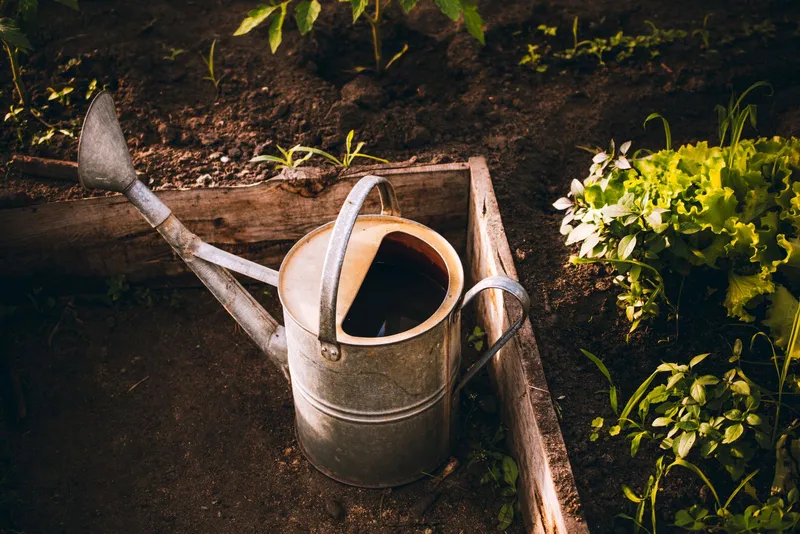 Outdoor Spaces
How to Build a Raised Garden Bed: 6 Simple Steps
How to build a raised garden bed in one weekend: six steps from siting and lumber to a soil mix that drains, plus the 2027 dates to fill it by weather station.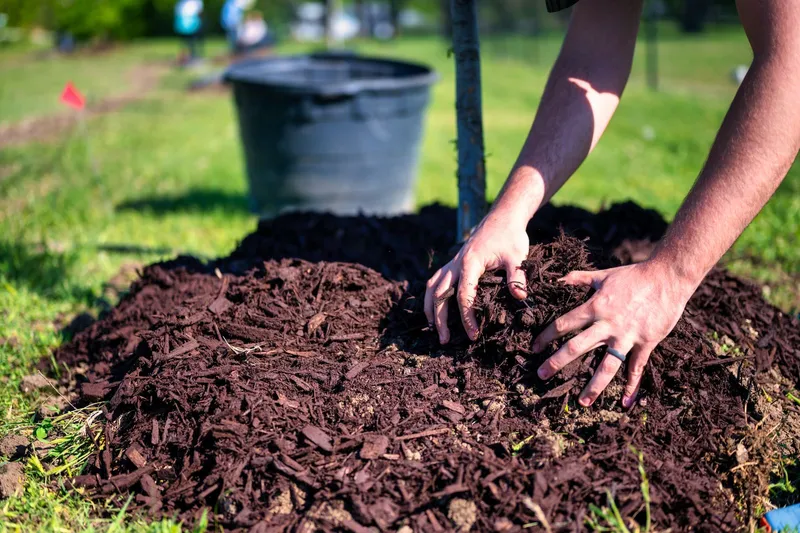 Outdoor Spaces
No Dig Garden: 6 Simple Steps to Shrink Your Lawn
A no dig garden turns lawn into beds without lifting turf: cardboard, compost and mulch, with a 2027 calendar counted back from your last frost.Reading us often? Add MyGreenyGarden as a preferred source on Google and our guides are more likely to be highlighted when you search.