When to Start Seeds Indoors: A Simple 2027 Calendar
When to start seeds indoors is arithmetic: count the packet's weeks back from your last frost, then use the 2027 calendar by USDA band to fix the sowing date.
Key takeaways
- When to start seeds indoors is one subtraction: the weeks-to-transplant number on the packet counted back from your own average last frost date, not a neighbor's.
- A USDA zone is an average winter minimum, not a spring date. Use the band to shortlist a date and a weather station to fix it — one state can span ten weeks.
- Warmth gets a seed out of the soil; light from the moment it shows is the only thing that stops it stretching.
- Sow later rather than earlier. A tray that is ready two weeks before the weather is ready costs more than a short season.
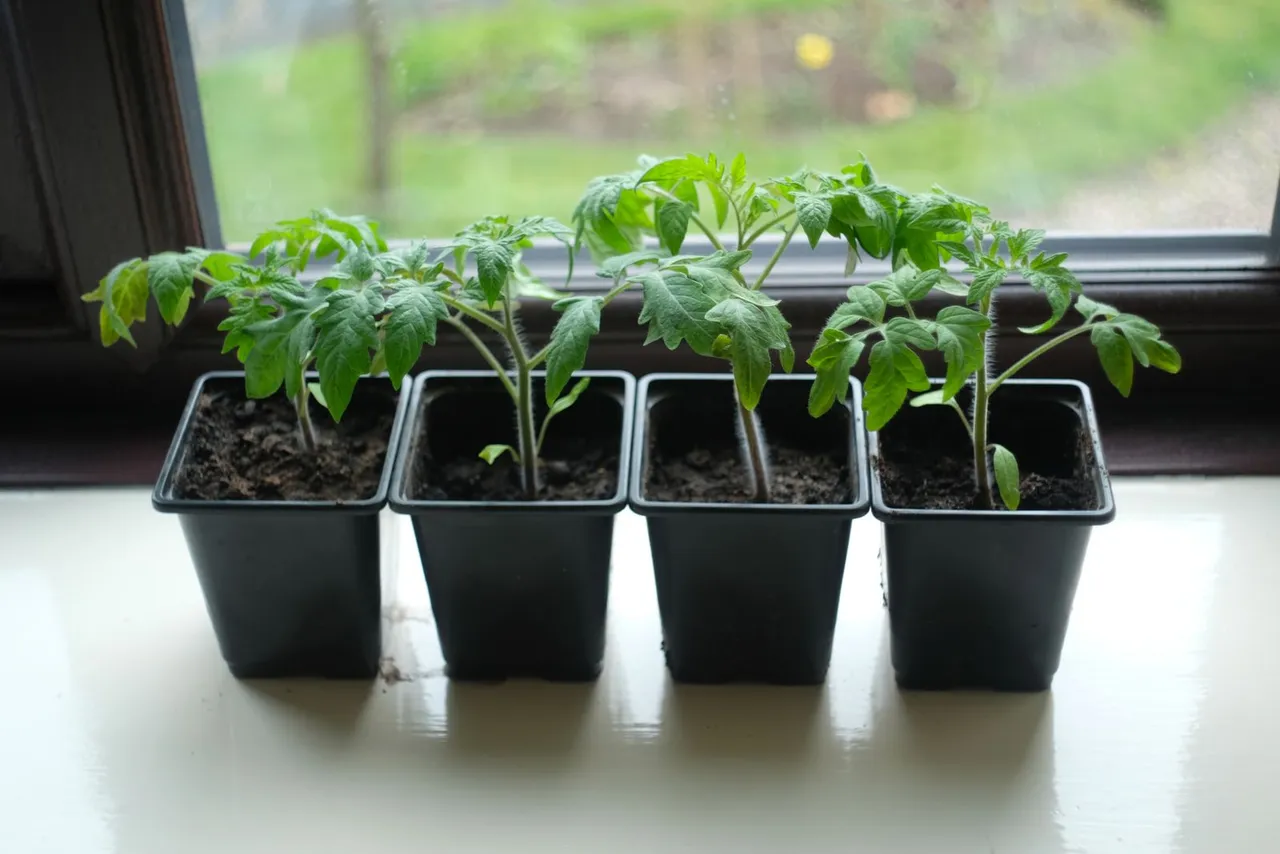
A seed packet answers when to start seeds indoors in a single line — “sow 6–8 weeks before last frost” — and then leaves you to work out what that means where you live. That line is the whole decision. It is arithmetic, not equipment: take the weeks off the packet, count backward from your own average last frost date, and write the answer on the tray with a marker.
Everything after that date is craft rather than scheduling. Depth, mix, warmth, light, and a two-to-three-week transition that decides whether a good seedling survives its first week outdoors. Get the date wrong and no amount of gear rescues the tray; get it right and a windowsill and a $12 tube will do the job.
So when to start seeds indoors is the one decision worth making carefully up front. Everything below assumes you have made it.
When to start seeds indoors: count back from your last frost
The answer is one subtraction. Find the weeks-to-transplant figure for your crop, then count that many weeks back from your average last frost date.
Clemson Extension’s seed-starting factsheet publishes the numbers by crop group, and they range from three weeks to ten — worth memorizing:
| Crop | Seeding to transplanting |
|---|---|
| Squash, cucumbers, melons | 3–5 weeks |
| Broccoli, Brussels sprouts, cabbage, cauliflower, collard, kale | 5–7 weeks |
| Lettuce | 5–7 weeks |
| Tomato, eggplant | 6–8 weeks |
| Pepper | 8–10 weeks |
That table is why peppers get sown first even though tomatoes feel like the headline crop. A pepper sown on the same day as a tomato can be up to four weeks behind it at planting time, and a pepper that meets cold soil stalls for two weeks.
Then the second half of the subtraction: which frost date? Not the one on a national map, and not a neighbor’s. This is the step people skip, and it decides the answer as much as the packet does: when to start seeds indoors is a question about your garden, not about your crop. Oregon State University Extension’s seed-starting schedule shows the method plainly — most gardeners in Eastern Oregon work from May 21 as the average frost-free date, and from that single number the schedule derives an indoor sowing date for every crop on the sheet.
One distinction matters more than beginners expect. Your frost date is not a fixed point; it is a probability. The University of Maryland Extension’s guide to spring frost dates puts it in numbers: for one Maryland station there is a 90 percent chance of a 32°F night on or after March 29, and only a 10 percent chance of one on or after April 19. The second date is the safer bet for a tender seedling, and it is nearly three weeks later.
NC State’s explanation of the NCEI freeze tables makes the same point from the other side: read the 90 percent column when late cold would be costly, the 10 percent column when you are willing to gamble. Seed starting indoors is a gamble you take with a tray, not with the whole garden, so the honest default is the later of the two dates.
And if you are choosing between two dates, choose later. Cornell’s vegetable program names starting transplants too early as one of the biggest mistakes gardeners make, because a transplant that is ready before the weather is ready spends its best weeks waiting on a windowsill. A week of delay costs a week of season. Three weeks of earliness costs the plant — and that, not the packet’s number, is the real answer to when to start seeds indoors.
The 2027 frost-date calendar by USDA band
Here is when to start seeds indoors laid out as a calendar: a named weather station with a published average last frost, the USDA band that station sits in, and three sowing windows counted back from that date. The weeks are Clemson’s; the dates are the station’s.
| USDA band | Station, average last frost | Tomatoes (6–8 wk) | Peppers (8–10 wk) | Brassicas and lettuce (5–7 wk) |
|---|---|---|---|---|
| 8b | Wilmington, NC — March 17 | Jan 20 – Feb 3 | Jan 6 – Jan 20 | Jan 27 – Feb 10 |
| 8a | Raleigh, NC — April 8 | Feb 11 – Feb 25 | Jan 28 – Feb 11 | Feb 18 – Mar 4 |
| 7a | Boone, NC, at 3,360 ft — May 1 | Mar 6 – Mar 20 | Feb 20 – Mar 6 | Mar 13 – Mar 27 |
| 6a | Central Nebraska — early May | Mar 10 – Mar 24 | Feb 24 – Mar 10 | Mar 17 – Mar 31 |
| 6b | Eastern Oregon — May 21 | Mar 26 – Apr 9 | Mar 12 – Mar 26 | Apr 2 – Apr 16 |
| 5b | Interior New Hampshire — late May | Mar 30 – Apr 13 | Mar 16 – Mar 30 | Apr 6 – Apr 20 |
Read it in one direction only: down the band column until you find your own, then across to the crop you are sowing. The NC State freeze-date tables supply the North Carolina stations, Nebraska Extension gives that state’s figures by region — late April in the southeast, early May central, mid May northwest — Oregon State the Eastern Oregon date, and New Hampshire Extension the late-May figure for Zone 5 in New England.
Two of those rows come from the same state and are six weeks apart. Wilmington is on the coast at sea level; Boone is at 3,360 feet in the mountains. Seed starting indoors is a calendar problem before it is a craft problem. That gap is not a rounding error, and it is the reason the band column cannot be the only column you use.
If your band is not in the table, the arithmetic still is. Your county extension service publishes the station figure for the nearest airport or research farm, and every row here is that figure minus 5, 6, 7, 8 or 10 weeks. Write your own row at the bottom of the table and use it. That is the last piece of when to start seeds indoors you need before sowing anything.
A zone is a winter number, not a spring date
This is the part that costs people a tray every year. When to start seeds indoors goes wrong here more often than anywhere else, because the band tells you how cold your coldest night gets, not when your last frost arrives.
USDA’s Plant Hardiness Zone Map defines the zones by “the average annual extreme minimum winter temperature”, in 10°F bands. That is a measure of January, not of April. It tells you whether a perennial survives your winter; it says nothing about the date your spring stops freezing.
The consequence shows up inside a single state. NC State’s station table runs from March 5 at Hatteras on the Outer Banks to May 17 at Mt Mitchell, 6,240 feet up — same state, same hardiness map, ten weeks apart. Even within one town the spread is real: Maryland Extension lists wind, elevation, proximity to buildings and proximity to water as reasons two gardens a mile apart frost on different nights.
NOAA’s own map makes the same point at national scale. The Climate.gov map of the average last spring freeze, built from the 1991–2020 U.S. Climate Normals, plots the date after which the chance of freezing temperatures drops below 50 percent at each weather station, and notes that the Northeast and Southeast progress cleanly northward while the West does not — elevation and coastal influence break the pattern into pieces.
So use the band to find your row, and a station to fix the date. Then add your own microclimate: a garden against a south-facing wall runs a week or two ahead of a field on the edge of town, and a low spot where cold air pools runs behind it. If you have frost cloth, you can sow to the earlier date. If you do not, sow to the later one.
Which seeds are worth starting indoors
Not everything should be. Working out when to start seeds indoors only helps if the crop belongs indoors in the first place, and Clemson Extension’s split between transplants and direct-sown vegetables is worth taking seriously: broccoli, cabbage, kale, tomatoes, peppers, eggplant, lettuce, onions and sweet potatoes transplant easily, while beans, corn and carrots “do not do well as transplants and should be planted directly from seed into the garden”.
The reason is the root system. A carrot’s taproot is the crop, and transplanting disturbs the root you are growing it for. Corn and beans germinate fast and grow fast enough outdoors that a tray buys you nothing but a week of transplant shock. Brassicas are the opposite — slow, sturdy and tolerant of being moved — which is why a kale seedling started in February is a plant by April while a February-sown carrot seed is a rotten seed in cold ground. If you want the brassica case in more detail, the sequence for a pot-grown crop is in kale in a pot.
Squash, cucumbers and melons sit in the middle: three to five weeks indoors is enough and more is a mistake, because seed starting indoors has no way to hold a plant back once it has filled its cell, and a squash seedling kept waiting for warm soil sulks for two weeks after planting.
Seed starting mix: the one upgrade that pays
Use a seed starting mix, not the potting mix left over from last year’s containers. The difference is physical before it is nutritional.
Wisconsin Horticulture’s seed-starting guide explains the mechanics: germination mix is finer than a regular soil mix, which gives better seed-to-soil contact, and it is light and well drained, which keeps roots healthy. Fine particles touching the whole seed coat are how moisture reaches the seed evenly. A coarse mix leaves air pockets around it and the seed dries in patches. In seed starting indoors that difference shows up at week two, when a fine seed starting mix is still holding moisture through the whole cell and a coarse one has dried in patches.
The second difference is biological. Clemson specifies a sterile soilless mix and says why: soilless mixtures reduce soil-borne diseases such as damping-off, the Pythium fungus that infects a seedling at soil level and kills it. Clemson also rules out bagged topsoil, vegetable gardening mixes and potting mixes for starting seed. If you want to know what is actually in the bags, what goes into a potting mix covers the ingredients.
Containers matter much less than the mix. Anything with drainage works — cell trays, paper pots, saved nursery pots, a cardboard egg carton with slits cut in the base. Shallow beats deep: a seed needs enough mix under it to send down a root, and a shallow tray keeps the whole root zone in the same moisture band. Fill whichever you choose with seed starting mix to just below the rim, so there is room to water without washing it over the edge.
Depth: about as deep as the seed is wide
Sow shallow. Depth is the second half of when to start seeds indoors: the date fixes the week, and the depth decides which seeds come up at all. The packet rule is a multiple of the seed’s own size, and for most vegetables that means a few millimeters. Press the seed into the mix, cover it with a thin layer of the same seed starting mix, and firm it gently.
A seed planted too deep spends its stored energy pushing through soil instead of opening leaves, and it either fails or arrives late and weak. Shallow is the safer error as long as the surface stays damp, and it is the cheapest mistake to correct in when to start seeds indoors: sow the next cell shallower rather than deeper.
Some seeds break the rule in both directions, and Wisconsin Horticulture flags the two cases: a few need light to germinate and should not be covered at all, while others germinate better in the dark and can be covered with foil until they show. Read the packet for the line that says which, and take the foil off the moment anything green appears.
Warmth until it shows, then light — 16 hours of it
Seeds and seedlings want opposite conditions, and treating them the same is where windowsill operations go wrong. Seed starting indoors is a lighting problem wearing a warmth costume: the heat only has to last until the seed breaks the surface.
For germination, warmth matters more than light. Wisconsin Horticulture notes that many seeds germinate well with bottom heat, that a seed can take anywhere from three days to three weeks to come up, and that the mix must stay moist but not soppy, because drying out during germination is fatal. A clear plastic cover holds the moisture in. An uncovered tray of seed starting mix in a heated room dries out in hours, and a seed that dries at that stage does not recover. Light is irrelevant until the seed breaks the surface, so a warm, dark corner is a perfectly good place to wait.
The day the first green shows, everything flips. Clemson Extension is specific: transplants grown indoors need 16 to 18 hours of bright light a day to come out stocky, and under low light vegetable seedlings “become leggy, weak, and tend to topple over”. Sixteen hours is more than a January window offers, which is why the same factsheet describes a workable rig — 48-inch, 40-watt fluorescent tubes on a timer, two to four inches above the plants, raised as they grow. That gap is the setting that produces a short, thick stem.
Wisconsin adds the other half of the temperature story: turn the bottom heat off once the seeds are up, because germinated seedlings grow better with fluctuating day and night temperatures, and keep cool-season crops such as cabbage, kohlrabi, spinach and mustard at 50 to 60°F by day if you have a cool room to give them. Cool air slows the stretch that warm air and weak light produce together.
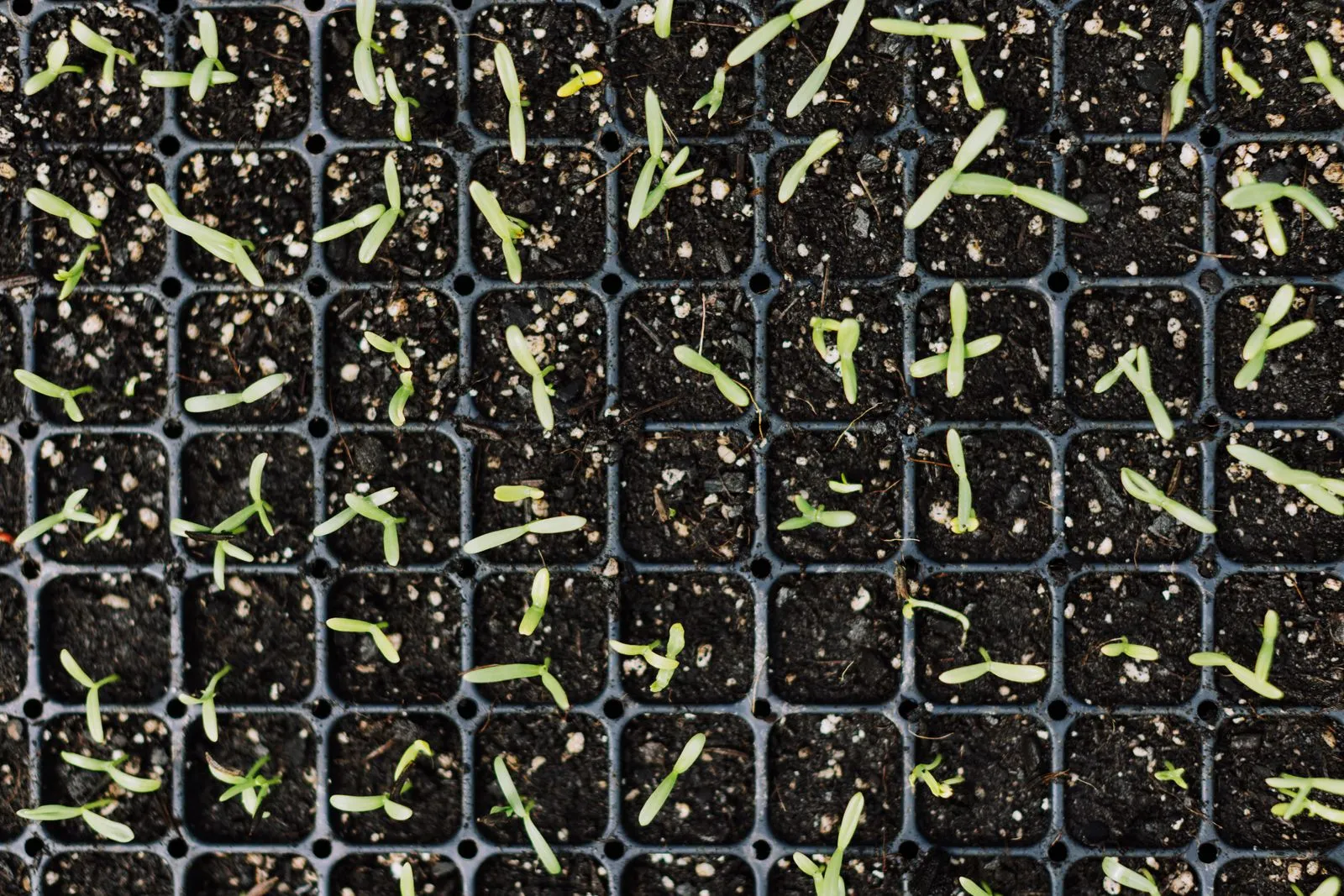
Photo: K via Pexels (https://www.pexels.com/photo/young-seedlings-in-black-planting-trays-31113012/).
Why your seedlings go leggy
Legginess is one mechanism, and once you can name it you stop guessing. When to start seeds indoors gets all the attention; light is what decides the plant. A seedling that cannot find enough light extends its stem, spending stored energy on reaching rather than on leaves, and the visible symptom is a long pale gap between the soil line and the first true leaves. It is not a variety quirk, not a feeding problem, and it does not fix itself by waiting.
I ran into this properly in the spring of 2026, with a tray of tomatoes on a shelf I had judged bright, which turned out to get about three hours of direct sun. By the third week the gap between soil and first leaves was longer than the leaves themselves, and every seedling leaned the same way. Moving the tray six inches closer to the glass and hanging a tube two inches above the tops changed the next two weeks completely: the stems thickened and the new leaves came in flat rather than folded.
If the stem is already long, repot it deeper. Tomatoes root readily along a buried stem, and most other seedlings tolerate being set a little lower than they were. Then keep the plants close to the light — inches from the glass, not at the back of the desk, because seed starting indoors at this stage is a game of inches. The other half of the fix is cooler air, which is why a window cracked nearby for part of the day helps sturdier growth, as long as no cold draft lands directly on the tray. A healthy tray two weeks in looks short and wide, not tall and thin.
Damping-off: the collapse at the soil line
Damping-off is the failure that looks like neglect and usually is not. A seedling that was fine at breakfast is lying flat by evening, with a pinched, water-soaked stem at soil level. Clemson names the cause as Pythium, and two of the three controls are already in this guide: sterile seed starting mix, and water discipline.
The third control is air, and it is the one nobody budgets for. Wisconsin Horticulture recommends a fan blowing gently across the seedlings and explains the mechanism — air movement deters the fungus and triggers production of structural proteins that thicken cell walls and give the plant a stronger stem. Commercial growers brush their seedlings for the same reason, and you can copy it by running your hands lightly over the tops once a day. Clemson suggests starting the fan when the plants have two true leaves and leaving it on until they are transplanted, while watching moisture more closely because moving air dries the mix faster.
Water from the bottom, and let the surface dry
Bottom watering is the default indoors, because overhead watering displaces seed and knocks over seedlings that have barely rooted. Once the seed starting mix has been soaked and drained, the tray is heavier than it looks and the surface dries first. Clemson’s method is a reservoir: stand the tray in one to two inches of water for three to ten minutes, then put it back under the light. Watering from below also keeps the surface drier, which is where the damping-off fungus lives.
Then let the tray get light before you water again. Clemson waters transplants “when they are slightly wilting” and stops when water runs out of the bottom of the container, warning that a large cell can look dry on top while the mix below is still wet — which is how trays get overwatered by careful people. Algae on the surface is the tell that you are watering too often. The same instinct, lift the pot and read the weight, is what watering houseplants without guesswork is built on, and it transfers to a seedling cell without modification.
Feeding starts at the first true leaves, not before
The first pair of leaves a seedling opens are seed leaves, and they arrive with the seed’s own food supply. This is the last stage of seed starting indoors that is about the tray rather than the plant. The next set — the first true leaves, shaped like the plant’s adult leaves — marks the point where it starts living on what you give it.
Clemson’s instruction is to begin then: fertilize seedlings in a seed starting mix when the first true leaves appear, feeding at every other watering with a water-soluble starter fertilizer and watering with plain water in between to stop salts accumulating in the mix. Seed starting mix contains almost no nutrients by design, so this is not optional for plants that will sit in a tray for another month. Feed at the seedling rate on the label rather than the rate for established plants; a small plant in a small cell has nowhere to put the surplus.
Hardening off: two to three weeks, not an afternoon
A seedling raised indoors has never met wind, direct sun or a cold night. Seed starting indoors ends with the slowest two weeks of the whole job, and it is the one most people cut short. Clemson’s program is more patient than most gardeners expect: start a fan when the plants have two true leaves, and once they are about three inches tall begin taking them outside during the day and bringing them back in before sundown, gradually giving them more direct sun, for two to three weeks.
The same factsheet is blunt about the cost of skipping it. A plant rushed outdoors is damaged, and the damage shows up later as delayed growth, reduced fruiting and reduced yield — exactly the opposite of what starting early was supposed to buy. Transplant on a cool, cloudy day if you can, and expect a short slowdown even when you do everything right.
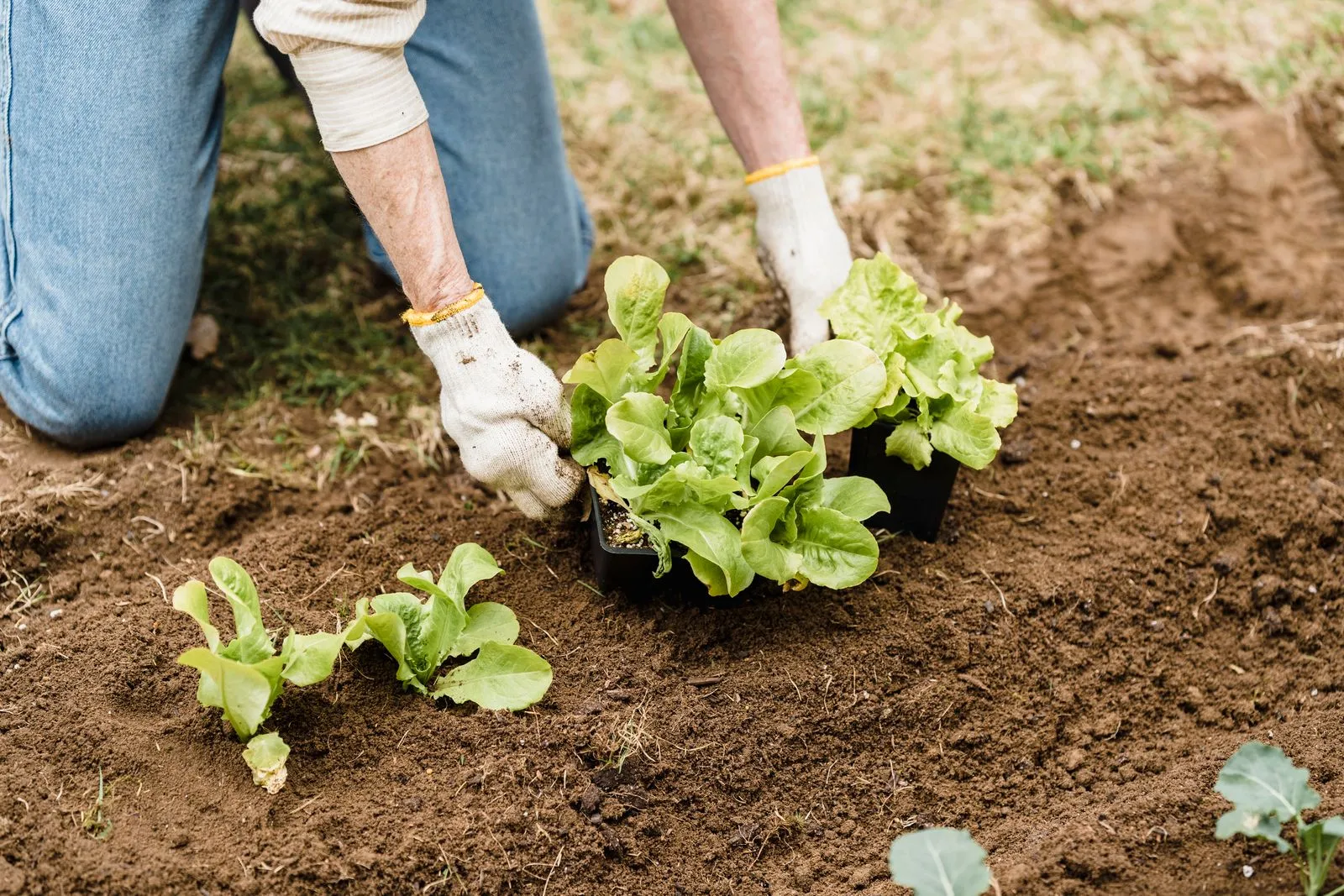
Photo: Greta Hoffman via Pexels (https://www.pexels.com/photo/person-planting-green-plants-in-ground-7728874/).
The mistake that costs the most
The most expensive error in seven seasons of growing my own transplants was not a disease or a bad mix. It was sowing tomatoes ten weeks before the last frost because the packet said 6–8 and I read the 6 as a floor rather than a range. The error was mine: when to start seeds indoors does not come from the packet, it comes from the date you count back from.
Those plants flowered on the balcony shelf in April, set a truss indoors with nothing to pollinate it, and then spent three weeks in a pot too small for their roots before the soil outside was warm. The first outdoor truss dropped. The plants I sowed three weeks later, on the later date, overtook them by mid-June and cropped first. The cost was a packet of seed and a month of shelf space, and the lesson was that earliness is not a quality in a transplant.
Seed starting indoors: the five things that decide it
When to start seeds indoors comes down to five decisions, in this order, and every one of them costs nothing to change next season.
- The date. Packet weeks counted back from your own last frost, later rather than earlier.
- The mix. A seed starting mix, fine and sterile, in anything that drains.
- The depth. About as deep as the seed is wide, less for the seeds that need light.
- Warmth, then light. Bottom heat until the first green, then 16 hours of bright light.
- Hardening off. Two to three weeks of short outdoor days before the garden.
If a tray fails, it is almost always one of those five, and the failure names which one. Seeds that never came up are depth or moisture. Seedlings that came up and then stretched are light. Seedlings that collapsed at the soil line are air and water. Plants that sulked for two weeks after planting skipped the last one.
The honest version
Starting from seed is slower and messier than buying seedlings, and in a bad spring the bought plants will beat yours into the ground. What you get for the trouble is choice — varieties no garden center near you stocks — and arithmetic that makes the season predictable rather than lucky.
So write your last frost date on the calendar, count back the weeks for each crop, buy one bag of seed starting mix, and put the tray where the light actually is. When in doubt about when to start seeds indoors, take the later date. A plant that goes out a week late has a whole season to recover. A plant that goes out three weeks early spends that time getting weaker.
That is the whole of seed starting indoors: one date counted backward, a mix fine enough to hold moisture against the seed, warmth until it shows, 16 hours of light after, and a slow two-week walk to the garden. Most of the failures in a first season are one of those five, and every one of them is free to fix next time. More plant guides, including the container routines this one borrows from, live under Plants and Care.
QUESTIONS GARDENERS ASK
Common questions
When should I start seeds indoors?
Count the weeks-to-transplant figure on the packet backward from your average last frost date. Tomatoes want 6 to 8 weeks, peppers 8 to 10, brassicas and lettuce 5 to 7. If you are unsure of your frost date, take the conservative figure for your area — the later date of the two — rather than the earliest.
How many weeks before the last frost should I start tomato seeds?
Six to eight weeks. Clemson Extension's seed-starting factsheet puts tomato and eggplant at 6 to 8 weeks from seeding to transplanting, which means a garden with a mid-May last frost sows indoors between mid-March and the end of March.
Do I need a grow light to start seeds indoors?
No, but you need light. Clemson Extension says transplants grown indoors need 16 to 18 hours of bright light a day to come out stocky, and that a windowsill alone tends to produce seedlings that reach for the glass. A bright window plus a plain 48-inch, 40-watt fluorescent tube two to four inches above the tray is enough to fix that.
Why are my seedlings tall and thin?
They are stretching for light. A seedling that grows a long pale gap between the soil and its first leaves is spending stored food on stem instead of leaves. Move the tray into brighter light, drop the lamp to two to four inches above the tops, and repot the longest stems deeper — tomatoes will root along a buried stem.
Can I use potting soil instead of seed starting mix?
Clemson Extension advises against it. Seed starting mix is finer and sterile, which gives a small seed close contact with moisture and keeps damping-off fungi such as Pythium away from the stem. Bagged topsoil and vegetable mixes carry both problems.
Should I start seeds earlier than the packet says?
No. Cornell's vegetable programme names starting transplants too early as one of the biggest mistakes gardeners make, and the seed-starting guidance from New Hampshire Extension says the same: a plant started too soon is poor quality by the time the garden is ready for it.
Do I need to cover seeds with soil?
Usually, and only about as deep as the seed is wide. Some seeds need light to germinate and should be pressed onto the surface instead, while others germinate better in the dark and can be covered with foil until they show. Wisconsin Horticulture notes both cases — the packet tells you which one you have.
Sources
- Clemson HGIC 1259 — Starting Seeds Indoors
- Wisconsin Horticulture — Seed Starting
- NC State Extension — Average First and Last Freeze Dates
- NC State Extension — Interpreting Freeze/Frost Probabilities from NCEI
- Nebraska Extension — Weather Ready: Frost
- Oregon State University Extension — Eastern Oregon Seed Starting Schedule
- University of New Hampshire Extension — How do I know when to start seedlings indoors?
- University of Maryland Extension — Spring Frost or Freeze Dates in Maryland
- USDA ARS — 2023 Plant Hardiness Zone Map
- NOAA Climate.gov — Average date of the last spring freeze across the United States
- Cornell CALS — Starting Plants Indoors
 Plants & Care
Snake Plant Care: 5 Simple Rules From 4 Years of Growing
Snake plant care without guesswork: how often to water in summer and winter, why leaves droop, when to repot, and how to propagate a plant you already own. Plants & Care
Yellow Leaves on Plants: 5 Causes and a Simple Test
Yellow leaves on plants are a diagnosis, not a verdict: five causes worth checking, from waterlogged roots to iron locked by pH, and a test that separates them. Plants & Care
How to Water Houseplants: 3 Simple Signals to Read
How to water houseplants without a calendar: three signals in the pot, a soak that reaches every root, and a seasonal table for real rooms and windows.Reading us often? Add MyGreenyGarden as a preferred source on Google and our guides are more likely to be highlighted when you search.