Plants on a Shelf Without the Clutter
A shelf of plants can look calm or chaotic, and the difference is light, height and space. Six rules for greenery that still reads as furniture.
Key takeaways
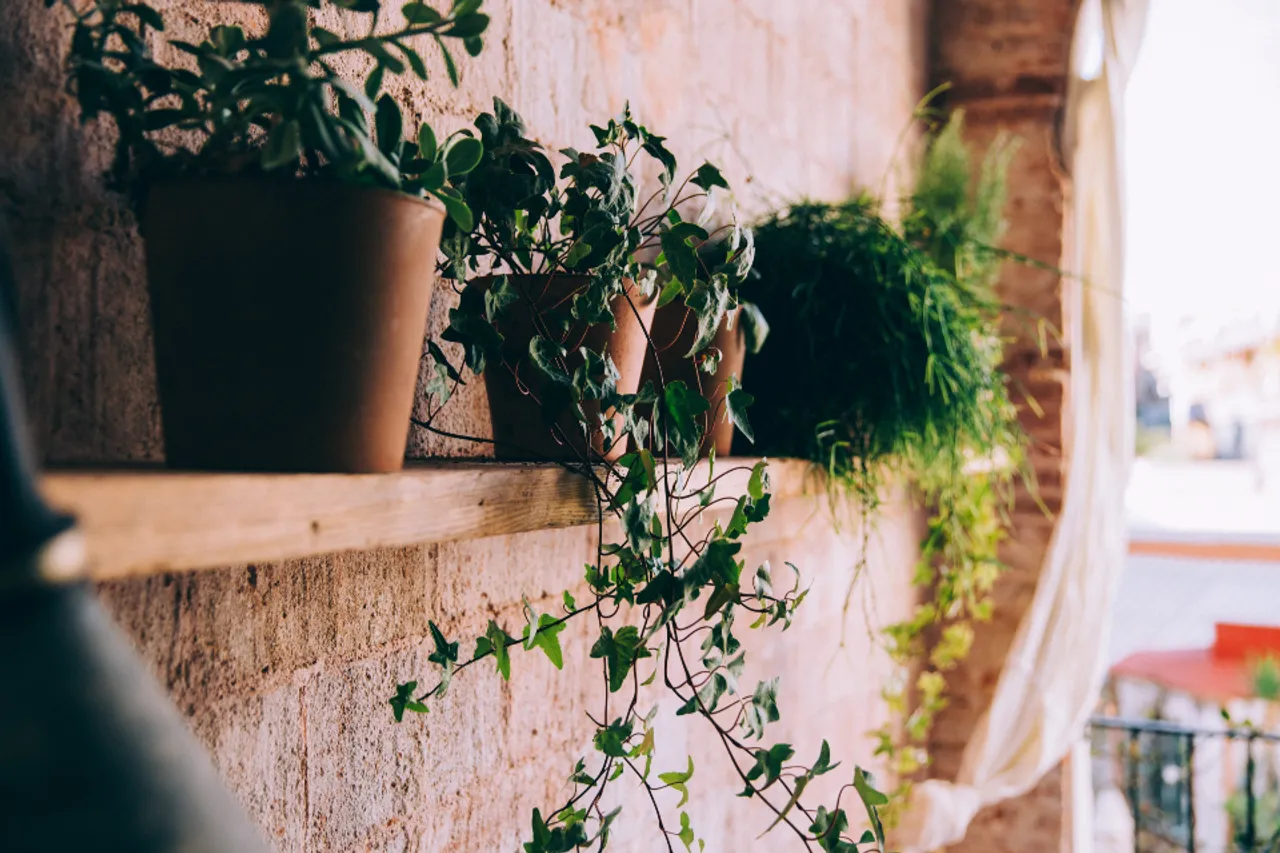
The shelf of plants is one of those ideas that looks effortless in a photograph and turns into a tangle in a real room. The trouble is that a shelf is furniture. It has a job — holding things at a height you can see — and a collection of pots can quietly stop it doing that job. The plants are not the problem. The number, the height and the light usually are. A few simple decisions keep a shelf looking like a considered part of the room instead of a plant hospital.
Decide what the shelf is for
Start before you buy a plant. Is this shelf a library, a display, or storage? A shelf crowded with books has room for one or two plants as punctuation. A shelf that is mostly display can carry more. Storage shelves in a hallway are the wrong place for plants entirely, because you will never see them and never water them.
Pick one shelf and one idea. A single trailing plant at one end, with a clear run of space beside it, does more for a room than a row of small pots evenly spaced along the whole length. Negative space is not wasted shelf; it is what makes the objects on it readable.
Check the light at shelf height, not at the window
A bright room does not mean a bright shelf. Light falls off fast as you move away from a window and down toward the floor, and a shelf mounted at eye level in a corner can be dimmer than it looks from the doorway.
Test it honestly before you commit. Put your hand flat on the shelf at midday and look at the shadow. A sharp, dark shadow means decent light. A soft, faint one means low light, and the plants that go there need to be the shade-tolerant kind — the same shortlist that works in a dark hallway. Ceiling lights are not plant light; they keep a plant alive at best, and no lamp in the room will substitute for a window.
If the shelf gets good light for part of the day, that is enough for most foliage plants. The plants that fail on shelves are almost always the ones that needed full sun and were given a bright-looking corner.
Choose for the shelf’s height, not your wish list
A shelf has a vertical budget. A tall upright plant will hit the shelf above it; a wide one will hang over the edge and get knocked. Work within the gap you actually have.
Three shapes cover almost every shelf. Upright and compact, for the middle of a shelf where you have headroom. Trailing, for an end where the plant can spill down over the edge without blocking anything. Small and slow, for tight gaps, where a little plant with interesting leaves is the whole point.
Mixed heights are what make a shelf look arranged rather than stocked. A trailing plant at one end, a mid-size upright toward the other, and a couple of small pots between them will read as one composition. Six pots of the same size in a row read as inventory.
Repeat one thing
The reliable way to make a mixed shelf look calm is repetition. Pick one constant — the pot material, the pot color, or the plant family — and let everything else vary. All terracotta pots, whatever is in them. All white ceramic. All green foliage with nothing flowering.
Repetition is what separates a collection from clutter, and it also solves the practical problem of pots that do not match. Growers’ plastic pots in a row look like a nursery shelf. The same plants in matching pots look like a decision. Inexpensive plain pots, all the same, will do more than expensive mismatched ones.
Water a shelf without wrecking it
This is the practical reason shelf plants die. You cannot soak a pot on a wooden shelf, and a saucer that overflows marks the shelf below it.
Two habits fix it. First, lift every pot onto a saucer, and check the saucer after watering rather than assuming it is fine. Second, water at the sink. Take the pot down, water it thoroughly until it drains, let it sit for a few minutes, empty the saucer, and put it back. It is more work than reaching up with a can, and it is the difference between a shelf that lasts and a shelf with water rings.
If a plant is too big to move, water it slowly and in small amounts, stopping before water reaches the saucer. Permanent planters with no drainage are a bad idea on any shelf: the water has nowhere to go, and rot starts at the bottom where you cannot see it.
Keep it clean, and keep it honest
Dust on leaves blocks light, and a shelf at eye level shows dust more than anything at floor level. Wipe leaves with a damp cloth every month or so; it takes minutes and the plants look immediately better for it.
Then be ruthless about the ones that are not working. A shelf keeps a struggling plant visible every single day, which is worse for the room than for the plant. If something has been sulking for months, move it somewhere it can recover, or let it go. A shelf of five healthy plants reads far better than a shelf of eight, three of which are down to their last leaf.
Leave room for the plants to grow
The last thing to plan for is that plants get bigger. A shelf filled to capacity today will be overcrowded in six months, and the crowding is what starts the decline: leaves pressed against leaves, no air movement, water you cannot reach the saucer to check.
Leave a gap at one end, and leave space between pots. That empty space is not a failure to fill the shelf. It is the part of the design that lets the plants stay on it, which is the same principle that keeps a small outdoor space working when you choose a few big pots over many small ones.
A shelf is a slow project
The shelves that look best in photographs were not styled in an afternoon. They were built over a year, one plant at a time, with things removed as often as added. Start with two plants and a clear idea of where the light falls. Add when you find something that fits the gap. Take things off when they stop fitting. That patience is the whole method, and it works on any shelf in any room.
 Home & Interiors
Houseplants for a Dark Hallway
Not every room gets direct sun. These low-light houseplants settle into a dim corner without a grow light, and they want less water than you think. Plants & Care
How to Water Houseplants: 2 Simple Signals to Read
How to water houseplants without drowning them: read two signals instead of a calendar, give a proper soak, and know when to wait a day instead. Small Spaces